Cable plant owners have had a good year. AI data centers are being built, 5G is rolling out, and overseas orders are piling up. Optical cable prices have multiplied several times since the end of last year, and specialty cables like G.657.A2 have gone up more than tenfold.
Good business brings new problems.
More orders mean capacity expansion, and expansion means buying equipment. But many cable plant owners find that the real headaches start after the equipment arrives.
Headache #1: The veteran operator is gone, and nobody knows how to set up the machine.
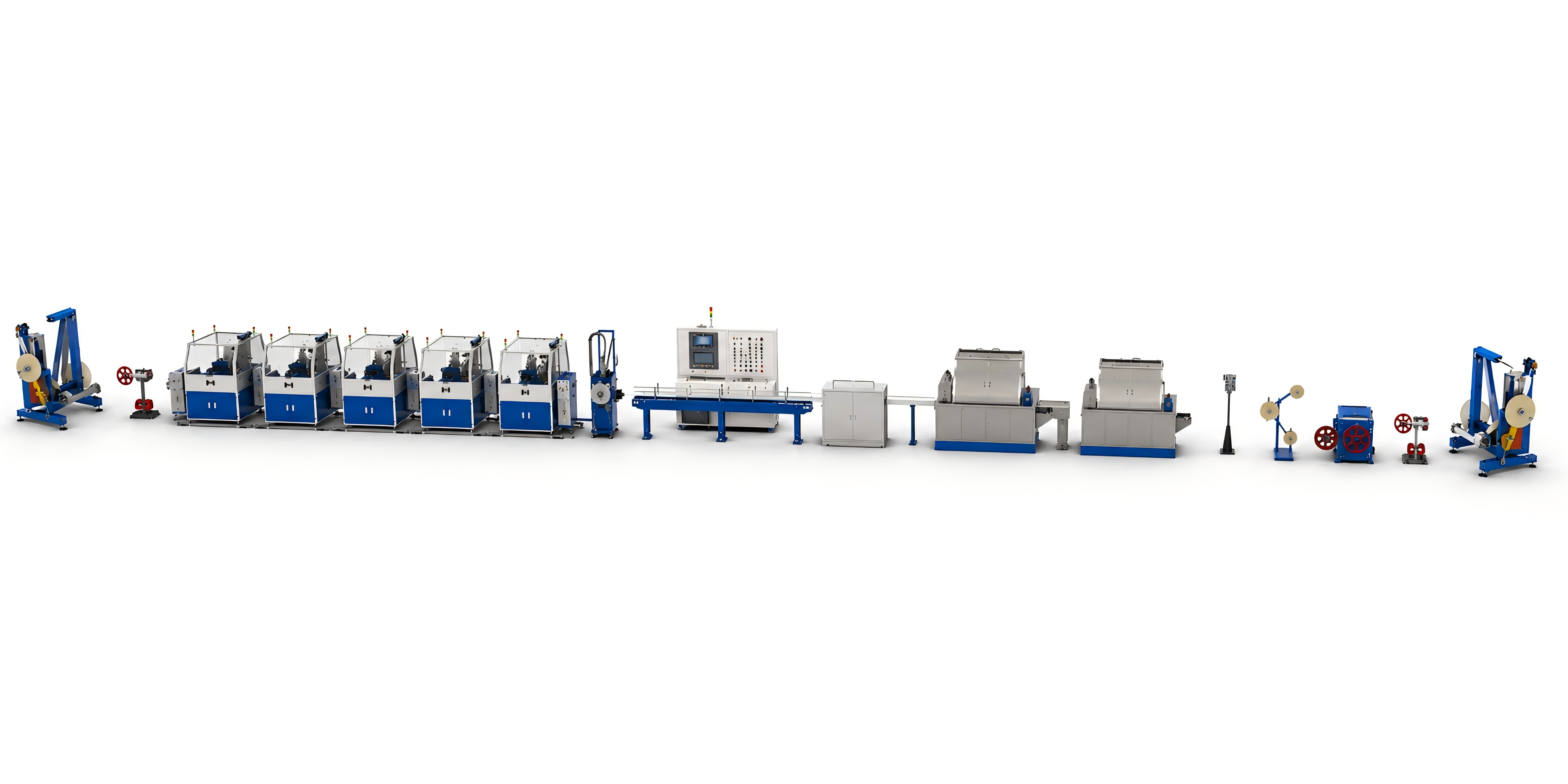
An optical cable stranding line isn’t complicated in theory – twist a few tubes together and put a sheath over them. But in practice, it’s all about “feel.”
How much tension? What pitch? How tight should the binder yarn be? In the past, these were all down to the line operator. A seasoned operator with more than a decade of experience could tell from the sound whether the machine was running right, and could spot concentricity deviation just by looking at the sheath.
But operators retire too.
Tefa Information’s optical cable manufacturing center set up a “mentor-apprentice” program, pairing over 120 pairs in three years. At Hengtong Fiber, Qi Renbao trained six technicians and seven technical leaders. But not every cable plant across the country has such resources. What about small and medium-sized plants? When the veteran retires, the new guy stares blankly at the touchscreen.
One plant owner put it bluntly: “It’s not that I don’t want to buy good equipment – I’m afraid nobody will know how to use it after it’s installed.”
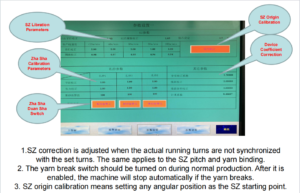
Hongkai’s approach is simpler: embed the veteran’s experience into the equipment. Process parameters for up to 20 different cable specifications – pitch, tension, temperature – are all stored as recipes. When switching products, the operator just taps the touchscreen and the parameters load automatically. A new hire can get up and running in three days of training, without the need for “three years under a master.”
Headache #2: Changeover takes half a day, wasting valuable production capacity.
Today’s cable orders are different from before.
In the past, carrier tenders were for hundreds of kilometers of the same specification – set the machine and leave it. Now? Data centers want high-fiber-count cables, overseas customers want G.657, carriers still want layer-stranded. Today it’s 12 cores, tomorrow 24 cores, the day after butterfly drop cable. Each specification change takes four or five hours of parameter adjustments.
A workshop supervisor at a Guangdong cable plant did the math: “We change over at least 20 times a month, four hours each time – that’s 80 hours a month. At 20 meters per minute, those 80 hours could have produced nearly 100 kilometers of cable.”
Hongkai’s changeover takes about 1.5 hours. Not magic – just recipes stored and loaded with one click. The 2.5 hours saved is extra capacity. And in a year when orders are overflowing, extra capacity means extra revenue.
Headache #3: You’ve landed an overseas order, but the equipment arrives and nobody can install it.
Optical cable exports exploded in 2026. In March alone, exports reached USD 245 million, up 263% year-on-year. Many cable plants have taken overseas orders, and some are even building factories abroad.
But here’s the catch: when the equipment arrives in Vietnam, Saudi Arabia, or Nigeria, who installs it?
Local workers may never have seen an optical cable, let alone assembled a stranding line. Some equipment suppliers ship the machine and wash their hands of it – the customer fumbles for two months and still can’t get it running.
Hongkai takes a practical approach: send an engineer over – 20 to 30 days from equipment unpacking to producing the first qualified reel, everything handled. Before the engineer leaves, they train the operators – bilingual manuals, electrical diagrams, common fault troubleshooting – all documented.
In 2024, Hongkai performed 89 overseas remote support sessions, averaging half an hour per resolution. If parts are needed, DHL express ships them as fast as possible. What cable plants fear most is equipment breakdown with nobody to fix it and no spare parts available. Solve that, and customers feel they’re in good hands.
Headache #4: The equipment isn’t precise enough to take on the high-value orders.
G.657.A2 cable prices have risen tenfold from last year, and orders have quadrupled. But this cable demands high-performance equipment – concentricity must reach above 98%.
Simply put: your equipment’s precision determines what tier of orders you can handle. If precision falls short, you’re stuck with standard layer-stranded cables that everyone fights over with razor-thin margins. With sufficient precision, you can take on high-profit orders like G.657 and high-fiber-count cables.
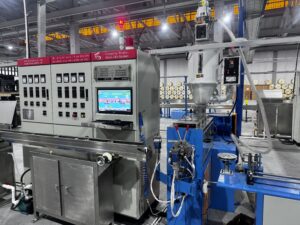
Hongkai’s numbers speak for themselves: concentricity 98.6%, wall thickness tolerance 0.04 mm, pitch deviation 0.08 mm. Nothing flashy, but it gets the job done for G.657. That’s what customers need.
What does reliable equipment – and a reliable supplier – look like?
After more than a decade in the optical cable equipment business, Hongkai has learned one thing: cable plants don’t want “the most advanced equipment” – they want “the most worry-free equipment.” Easy to use, easy to fix, quick to change over, and capable of taking on good orders. That’s enough.
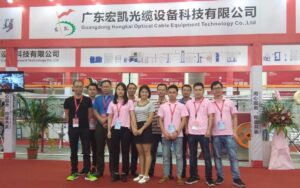
Guangdong Hongkai Optical Cable Equipment Technology Co., Ltd. started in cable equipment in 2005 and was formally established in 2015. We specialize in SZ stranding lines, optical cable sheathing lines, and butterfly drop cable lines. Nothing fancy – just rugged, durable, and precise. We’ve exported to over 15 countries and regions, with more than 160 sets running on production lines worldwide.
If you’re looking for optical cable equipment, or if you’ve bought equipment that’s hard to use or adjust, feel free to reach out to the Hongkai technical team. Start by reviewing our factory inspection reports and actual performance data – then decide if we’re the right fit.