Many plant owners have never done the math: the faster your line runs, the greater the waste may be. Those inconspicuous losses from scrap, downtime, and rework might not seem like much on a daily basis, but when fiber prices have quadrupled or quintupled, every meter of scrap is real money.
I. The “Cost Funnels” on an Optical Cable Production Line – Where Is the Money Leaking?
Funnel #1: Unstable stranding tension, pitch deviation, and entire reels scrapped
Stranding is the core process in optical cable manufacturing. If the loose tube pay-off tension is unstable, the stranding pitch will fluctuate. When the pitch deviates, the fibers experience uneven stress, and loss exceeds limits with temperature changes.
If an SZ stranding line has tension fluctuation exceeding ±0.5 N, the scrap rate for high-fiber-count cables can jump from 1% to over 4%. At current G.652.D fiber prices of RMB 83 per fiber-km, a production line with an annual output of 3,000 km can lose several hundred thousand RMB per year just from scrap.
Funnel #2: Poor sheath concentricity turns good material into waste
When the sheath is eccentric, wall thickness is thicker on one side and thinner on the other. The thick side wastes material, while the thin side offers inadequate protection and fails inspection. For specialty cables like G.657.A2, the sheath requirements are even stricter – if concentricity is below 98%, it’s essentially scrap.
Funnel #3: Slow changeover – equipment runs idle
Today’s order mix has changed – data centers require high fiber counts, overseas customers want G.657, and telecom operators need stranded loose tube designs. You may produce 12-fiber cables today and 24-fiber cables tomorrow. Each specification changeover takes half a day, with equipment idling and workers waiting.
Funnel #4: Equipment breakdowns with no one to fix them – downtime lasting days
Equipment runs 24/7, and problems will eventually occur. But many cable plants are located in tier-3 or tier-4 cities, or even in rural towns – finding an electrician who understands optical cable equipment is harder than finding a giant panda. Waiting for spare parts to be shipped and engineers to fly in can take three to five days.
II. What Can Digital Twins and AI Solve?
You may have heard the term “digital twin” and thought it was far from your reality. Simply put, it means building a virtual workshop in a computer – equipment status and parameters are synchronized in real time, so you don’t have to walk around the shop floor to check everything.
Some cable plants have already adopted this. Overall Equipment Effectiveness (OEE) increased by 15% to 20%, unplanned downtime was reduced by 30%, product defect rates dropped by 40%, and rework costs decreased by 25%.
Other manufacturers use AI for fine-grained cost control, accurately linking material costs to specific products, work orders, and even processes – saving about RMB 1 million in annual production costs on a single line.
Not every plant needs a full digital twin system, but it at least proves one point: data helps you see exactly where money is leaking.
III. How to Pay Less “Tuition” When Selecting Equipment?
With over a decade of experience in optical cable equipment, Hongkai has summarized a few practical suggestions:
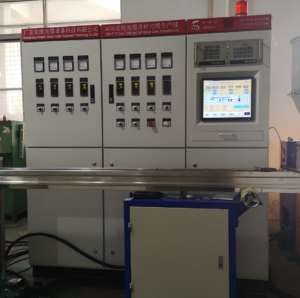
First, look at tension control accuracy – this is the “lifeline” of the stranding line.
Tension stability directly determines the scrap rate. The industry standard requires pay-off tension fluctuation during stranding to be ≤ ±0.5 N. When purchasing equipment, ask the manufacturer for the factory inspection report and check the actual measured values.
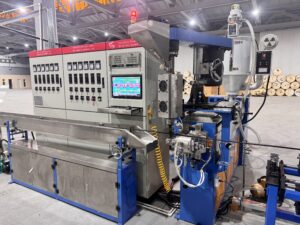
Hongkai’s SZ stranding line achieves measured pay-off tension fluctuation ≤ ±0.4 N and stranding pitch deviation ≤ ±0.08 mm.
Second, look for online inspection – don’t rely on naked-eye judgment of quality.
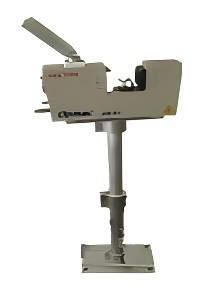
Does the sheathing line have a laser diameter gauge? Can it monitor outer diameter in real time and adjust automatically? Without online inspection, the equipment relies entirely on operator experience – and deviation can easily go unnoticed.
Hongkai’s sheathing line is equipped with a laser diameter gauge (accuracy 0.2 μm), with measured concentricity of 98.6% and wall thickness tolerance ≤ 0.04 mm.
Third, check how fast changeover is – don’t let capacity be consumed by setup time.
Does it have recipe storage? Can parameters be loaded with one click during changeover? Hongkai’s equipment can store process parameters for 20 different products, with changeover time within 1.5 hours.
Fourth, consider after-sales service – who fixes it when it breaks down?
Is remote support available? Are spare parts easy to obtain? Can technicians be sent for on-site repairs? Hongkai has exported to more than 15 countries and regions, offering operation manuals in both Chinese and English, remote video support, and on-site engineer services.
IV. About Hongkai
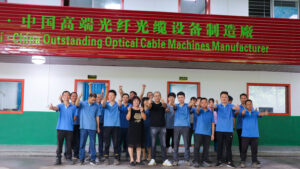
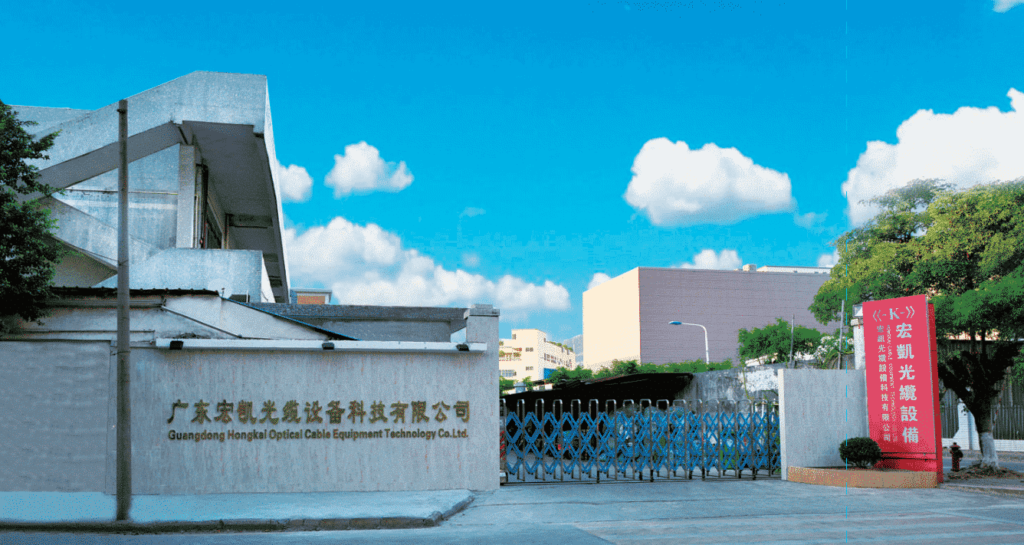
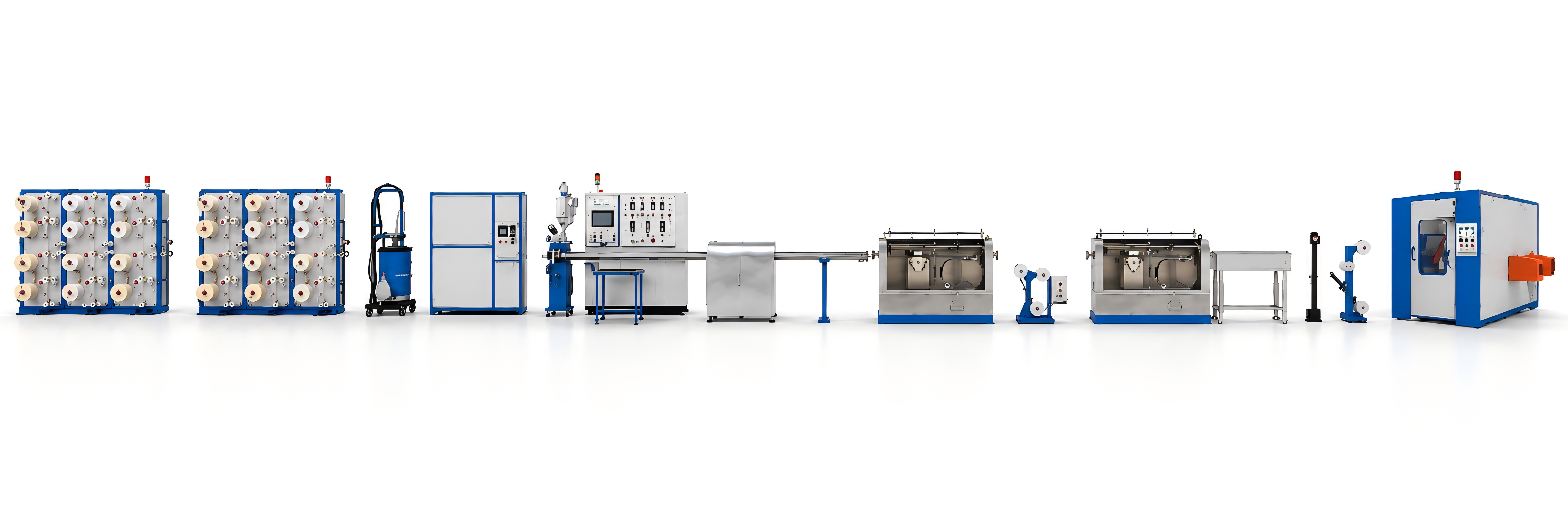
Guangdong Hongkai Optical Cable Equipment Technology Co., Ltd. started in the cable equipment industry in 2005 and was formally established in 2015. Its main products include SZ stranding lines, optical cable sheathing lines, and butterfly drop cable production lines.
If you are considering optical cable equipment, or if you want to calculate how large the “cost funnel” is on your existing line, you are welcome to contact the Hongkai technical team. First review the factory inspection report, check the actual data, and then decide whether it suits you.