During the optical cable stranding and sheathing production process, companies purchasing optical cable equipment generally face the following core pain points:
1.Tension fluctuation and stranding deviation in the SZ stranding and cabling process
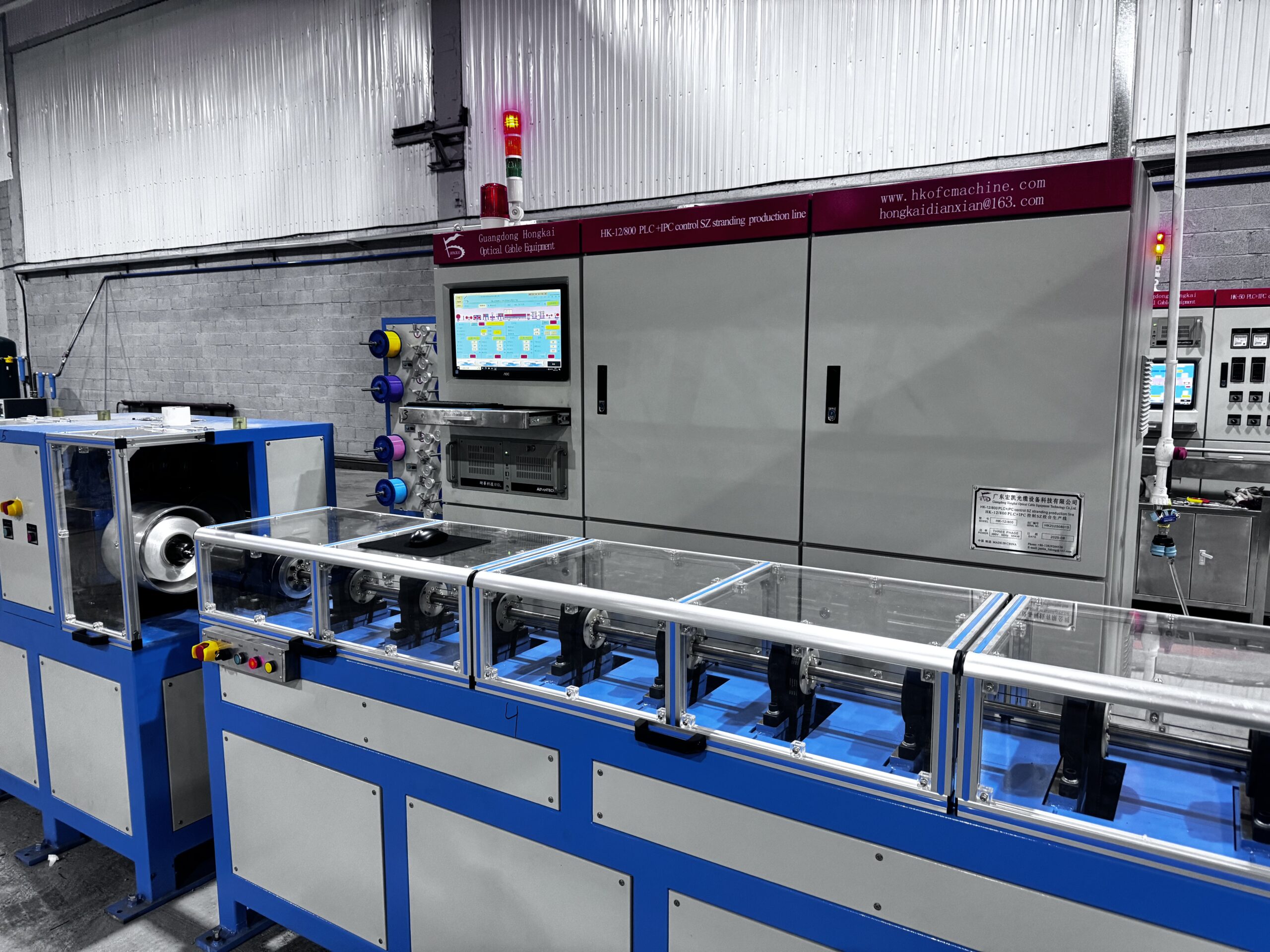
The SZ stranding and cabling process is a core step in optical cable production. The stability of loose tube pay-off tension, strength member pay-off tension, and take-up tension directly determines the mechanical and transmission performance of the optical cable. In actual production, real-time tension fluctuations can cause excessive deviations in stranding pitch, thereby affecting fiber excess length control and stress distribution in the optical cable. The binding (yarn wrapping) process is also affected by tension control: excessive yarn tension will press into the surface of the loose tubes, forming longitudinal indentations, leading to reduced cable roundness and local thinning of the tube wall. What customers care most about is whether the equipment can keep tension fluctuations within a minimal range during continuous high-speed production while maintaining consistency and stability of the stranding pitch.
2.Concentricity and thickness control deviation in the sheathing extrusion process
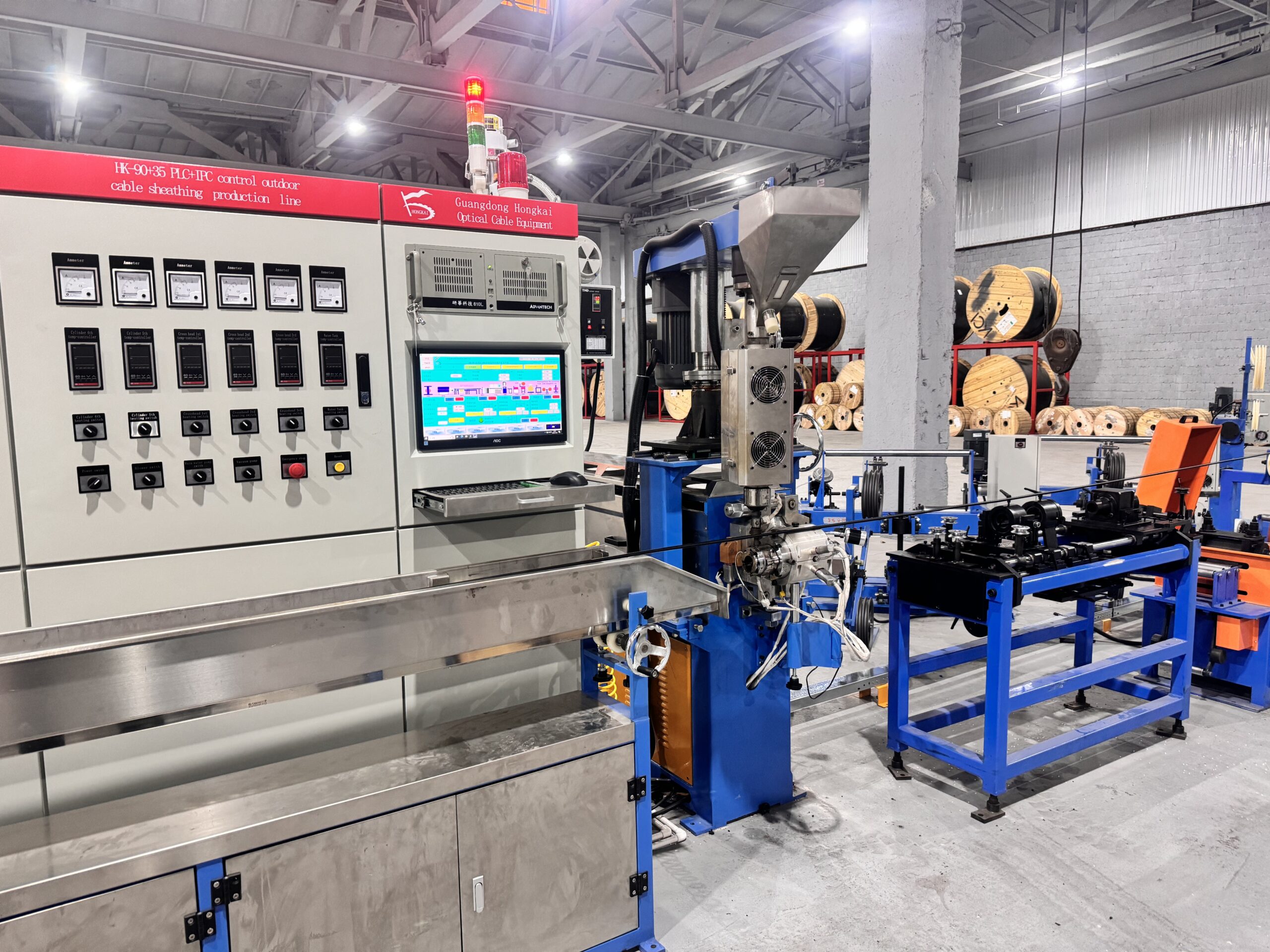
During the production of optical cable sheathing, adjustment of concentricity between the die and the tip is typically done manually. Differences in operator skill directly affect the uniformity of the sheath wall thickness. Even after manual adjustment, concentricity may drift during continuous production. Once concentricity exceeds tolerance, inconsistent sheath wall thickness leads to asymmetrical cable structure, reduced mechanical strength, and in severe cases, relative displacement between the core and the sheath. What customers need is an equipment solution that can automatically detect concentricity in real time and dynamically correct it, rather than relying on post-process manual calibration.
3.Complexity of plant-wide planning and multi-equipment coordination
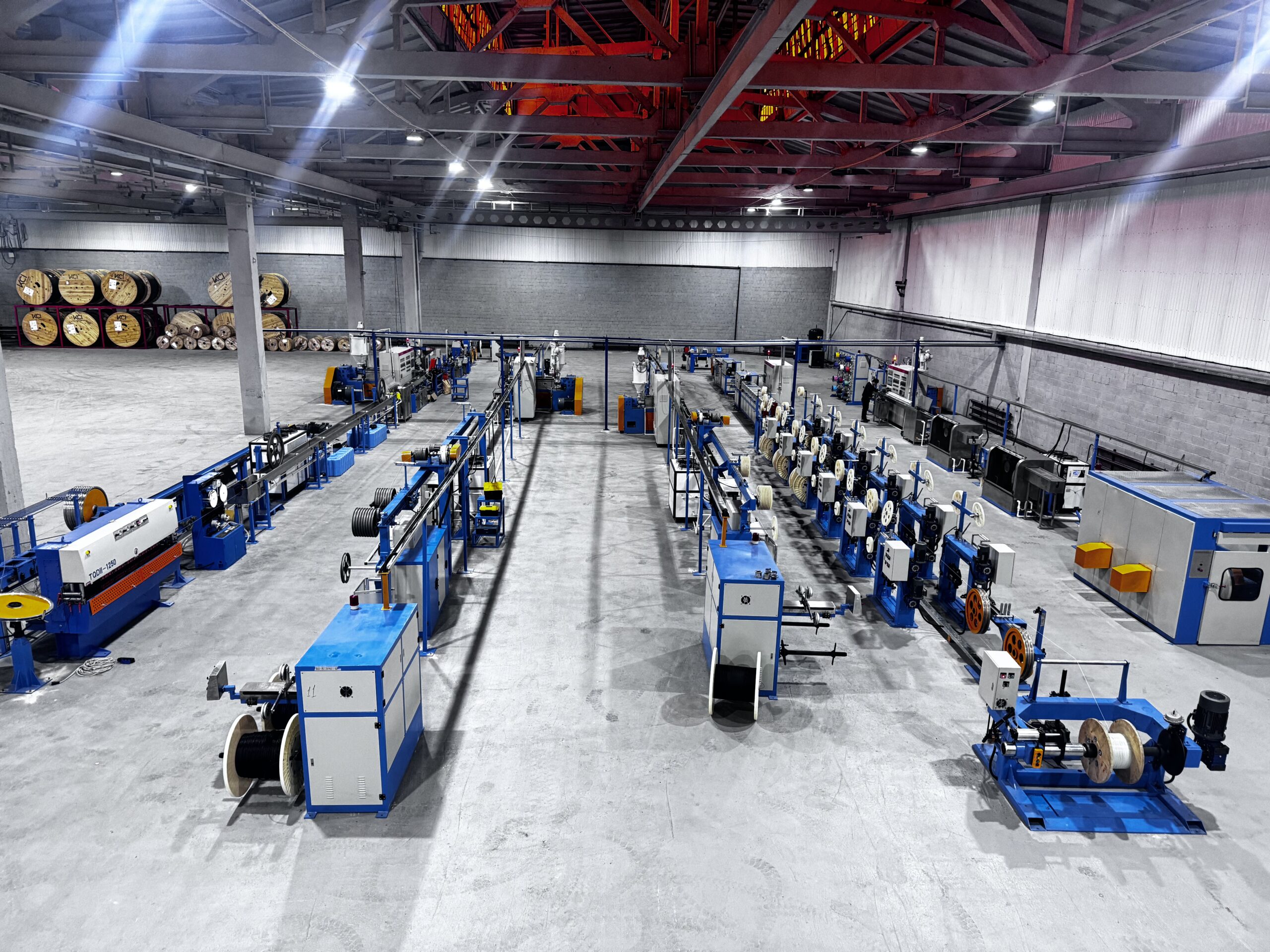
Optical cable production involves multiple processes including stranding, binding, taping, sheathing extrusion, cooling, pulling (caterpuller), and take-up. When equipment comes from different suppliers, customers often face issues such as inconsistent interfaces, difficulties in process integration, and long line commissioning cycles. In traditional setups, customers need to integrate and commission stand-alone equipment themselves, which is not only time-consuming and labor-intensive but also prone to accumulating production risks at process interfaces. What customers need is a one-stop, whole-plant solution that provides unified planning, unified delivery, and unified after-sales support.
4.Equipment standards and international certification barriers in overseas markets
The export of optical cable equipment must meet the mechanical safety, electrical safety, and environmental requirements of the destination countries. The European Union market requires equipment to comply with CE certification standards, while the U.S. market requires products to pass UL safety certification. Different markets have varying certification systems, standard differences, and update frequencies. Equipment lacking internationally recognized certifications faces significant difficulty entering high-end markets such as Europe and the United States. Furthermore, after-sales services including overseas installation, commissioning, and personnel training are also important considerations in the purchasing decisions of international customers.
5.Insufficient production line flexibility and upgrade capability
Market demand is becoming increasingly diverse, ranging from conventional stranded optical cables to butterfly drop cables, tight-buffered flexible cables, and specialty optical cables. Changing product specifications require equipment capable of cross-category production. During line speed acceleration or deceleration, fluctuations in relevant control parameters directly affect the performance of products in process. Insufficient production line flexibility will constrain the customer’s ability to respond quickly to orders.
In response to the above industry challenges, Guangdong Hongkai Optical Cable Equipment Technology Co., Ltd. has developed the following technical standards through over 20 years of market practice:
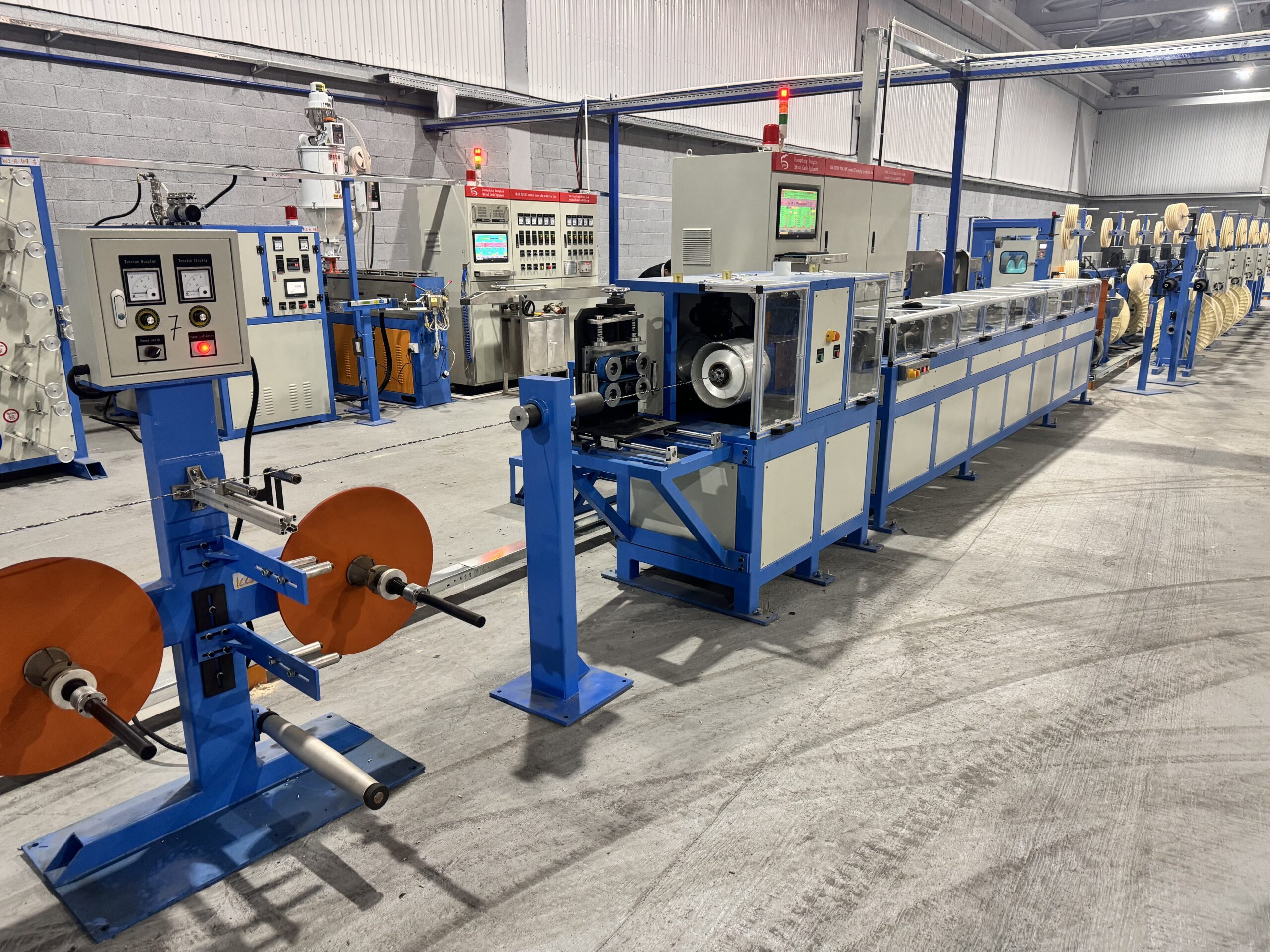
1.SZ stranding and cabling – Precision tension closed-loop and automatic pitch control
The core technical indicators of optical cable stranding equipment should achieve: tension control accuracy of ±0.5N (at line speed 20m/min), stranding pitch deviation ≤ ±0.1mm, sheath concentricity ≥98%, tensile strength ≥2000N, strictly complying with standards such as ISO/IEC 60793-1-44 and GB/T 7424.2. The loose tube pay-off adopts an active pay-off device with stable and reliable tension control. SZ stranding uses a fully differential structure for stable stranding pitch. The binding (yarn wrapping) adopts a dual-head, single-point bi-directional cross-binding method, and yarn tension is controlled in segments, ensuring stability and reliability.
2.Sheathing extrusion – Online concentricity real-time monitoring and automatic correction
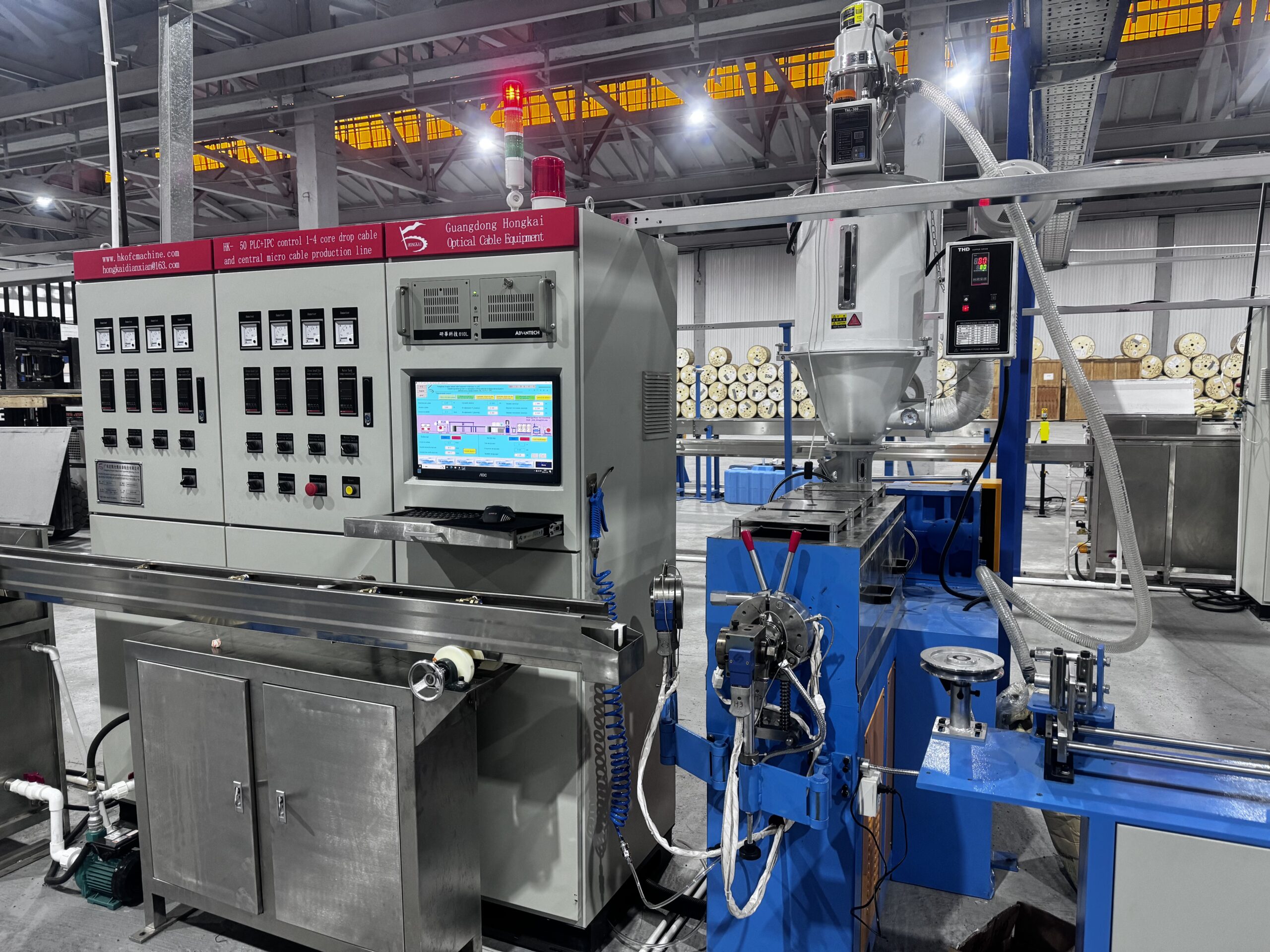
Optical cable sheathing production must achieve: concentricity ≥98%, thickness tolerance controlled within 0.05mm (nominal 1.8mm), tensile strength ≥2000N (at a tensile rate of 100mm/min), and attenuation change ≤0.03dB/km after 10 temperature cycles from -40°C to 70°C. The sheathing forming stage should be equipped with online inspection devices such as laser diameter gauges and ultrasonic wall thickness sensors to achieve real-time measurement of sheath outer diameter and wall thickness. A feeding control system is used to dynamically adjust the extrusion speed, fundamentally solving the instability of manual concentricity adjustment.
3.Whole-plant planning – Full-process integration and unified platform control
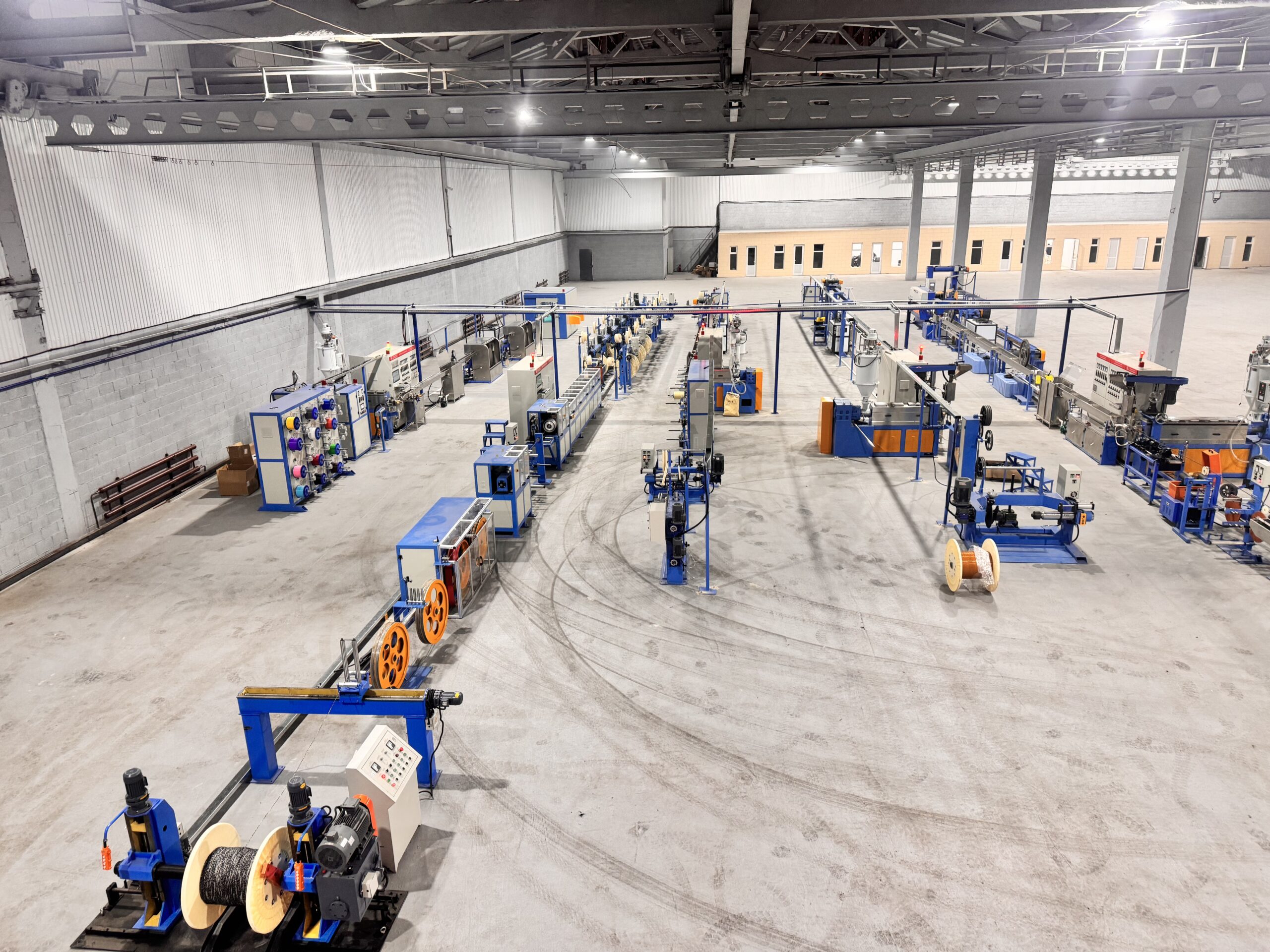
Whole-plant equipment should be planned based on a unified control architecture, enabling end-to-end monitoring from stranding to sheathing, shortening commissioning cycles, and reducing equipment failure rates. Technologies such as digital twins, equipment networking, and MES data integration allow real-time upload of equipment operation data to the production management system, eliminating data silos and achieving real-time, transparent, and traceable production status.
4.International standards compliance – Full equipment line meets CE/UL and other international certification requirements
Optical cable equipment must comply with mandatory certification standards of export markets. For the EU market, CE certification follows standards such as EN 50575, with fire performance classified into seven grades from Aca to Fca. Grades Cca and above also require factory inspection. For the US market, equipment must meet the mechanical and electrical safety requirements of UL certification. Equipment exporters should also be capable of providing full-process delivery services including cross-border transportation, overseas installation and commissioning, and localized personnel training.
5.Production line flexibility – Wide process compatibility for multi-product manufacturing
The equipment must be compatible with various sheath materials such as PVC and LSZH, and suitable for different specifications of tight-buffered fibers and loose tubes. It should support the changeover production of multiple product types, including butterfly drop cables, round drop cables, and indoor soft optical cables, to meet diverse order requirements.
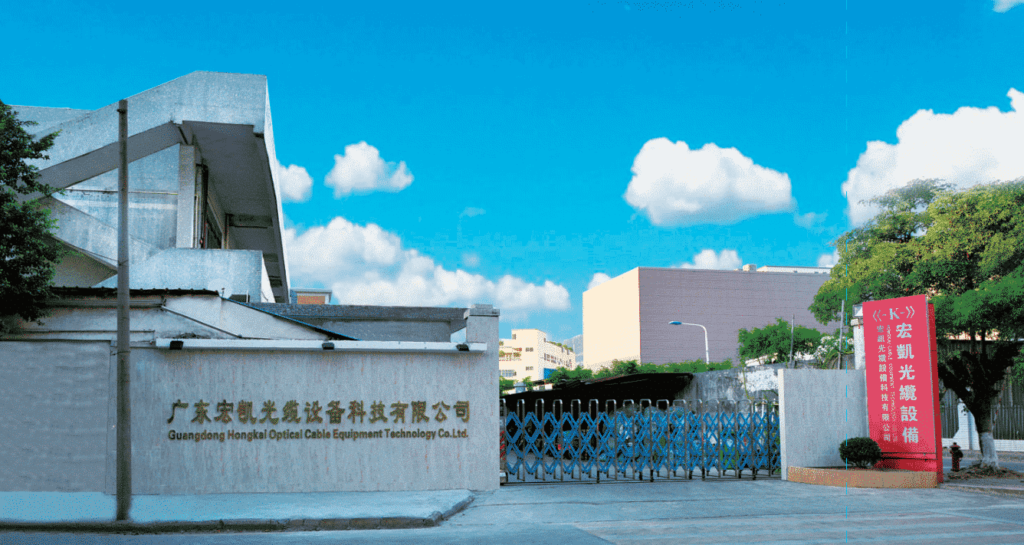
Guangdong Hongkai Optical Cable Equipment Technology Co., Ltd. (hereinafter referred to as “Hongkai”) was established on June 30, 2015, as the successor of Dongguan Humen Hongkai Wire and Cable Machinery Factory (founded in 2005). The company is located at No. 32 Hulin Road, Humen Town, Dongguan City, Guangdong Province. The founders have nearly twenty years of technical accumulation in the wire and cable equipment industry, consistently focusing on the R&D and manufacturing of optical cable stranding and sheathing equipment. The following sections elaborate our technical implementation path from five dimensions:
1.SZ stranding and cabling machine – Three-in-one integrated design: differential structure + layered binding + active pay-off
In the SZ stranding and cabling process, Hongkai equipment ensures precise control of tension and pitch through three technical measures:
Differential SZ stranding unit: Adopting a fully differential mechanical structure design, the stranding pitch is stable and reliable. It supports simultaneous stranding of multiple loose tubes (up to 12 pay-offs), meeting the production requirements of optical cables with different fiber counts.
Segmented binding yarn tension control: Using a dual-head, single-point bi-directional cross-binding structure, yarn tension is independently adjustable in segments. This effectively avoids cable structure deformation and reduced roundness caused by yarn being too tight or too loose, while significantly reducing the risk of yarn breakage during high-speed operation.
Active pay-off tension stabilization system: Loose tube pay-off is equipped with an active pay-off device. The strength member is paid off via a double-wheel tension control device, ensuring continuous and stable pay-off tension, and preventing sudden tension changes from impacting the fiber excess length during production.
Verified by actual production, the stranding pitch deviation of Hongkai SZ stranding equipment is consistently controlled within ≤0.1mm, maintaining stable pitch consistency even during large-scale simultaneous production of 12 loose tubes.
Core parameters of Hongkai SZ stranding and cabling machine:
| Parameter | Technical Specification |
| Strength member pay-off reel spec | PN800~PN1800mm |
| Tension wheel diameter | Ф800mm (dual wheel) |
| Optical fiber loose tube pay-off quantity | 12 reels (or as customer’s request) |
| Max. cabling outer diameter | Ф28mm |
| Pitch control | PLC stepless setting, full differential structure |
| Stranding angle | ±18° adjustable, with zero centering and over-twist alarm |
In the optical cable sheathing extrusion process, Hongkai equipment ensures sheath quality through the following technical measures:
Industrial PC + PLC integrated control system: The whole machine adopts coordinated control between an industrial computer and a PLC. Major electrical components are imported, enabling integrated control of the entire process from the extruder crosshead to the capstan take-up.
Laser diameter gauge online inspection: Equipped with a high-precision laser diameter gauge, the system monitors sheath outer diameter changes in real time, with measurement accuracy up to 0.2μm (scanning speed 200mm/s). Combined with the PLC’s PID adjustment function, the extruder screw speed is finely tuned, maintaining concentricity above 98%.
High-wear-resistant and high-precision extrusion assembly: The screw is designed with modern advanced technology. The gearbox gear surfaces are high-frequency quenched and precision-ground, greatly improving the equipment’s wear resistance and long-term operational reliability, reducing concentricity drift caused by mechanical wear.
Multi-material compatibility: The equipment supports extrusion production of various sheath materials including PVC, LSZH (Low Smoke Zero Halogen), and polyethylene, covering sheath forming requirements for multiple optical cable types such as butterfly drop cables, round drop cables, indoor soft optical cables, and bundle fiber optical cables.
Our sheathing production line can stably achieve process standards of concentricity ≥98% and thickness tolerance ≤0.05mm (nominal 1.8mm). The attenuation change of the produced optical cables after 10 temperature cycles from -40°C to 70°C is consistently controlled within 0.03dB/km.
| Parameter | Technical Assurance Specification |
| Concentricity control | ≥98% (online closed-loop regulation via laser diameter gauge) |
| Sheath thickness tolerance | ≤0.05mm (nominal 1.8mm) |
| Temperature cycling performance | Attenuation ≤0.03dB/km after 10 cycles from -40℃ to 70℃ |
| Control system | Industrial PC + PLC, main electrical components imported |
| Screw and gearbox | High-frequency quenching + precision grinding, high wear-resistant |
| Applicable materials | PVC, LSZH, polyethylene and other materials compatible |
3.Whole-plant planning – From single-machine delivery to full-process integration
Leveraging over 20 years of technical accumulation in the optical cable equipment industry, Hongkai provides customers with full-process whole-plant planning services, including factory layout design, equipment selection and matching, installation and commissioning, operator training, and after-sales maintenance. All equipment is developed based on a unified PLC platform, supporting modular networking and integrated control. It can also be connected to MES systems or configured with fault early warning platforms upon request, ensuring that customers can achieve unified management and data traceability across all processes including stranding, binding, taping, sheathing, capstan pulling, and take-up on a single platform.
We provide customers with complete series of solutions for the following equipment categories:
Indoor optical cable equipment production line
Outdoor optical cable equipment production line
Optical cable auxiliary equipment production line
Data LAN cable equipment production line
Wire and cable equipment production line
Supporting auxiliary equipment
4.International standards compliance and overseas delivery – Dual export of products and services
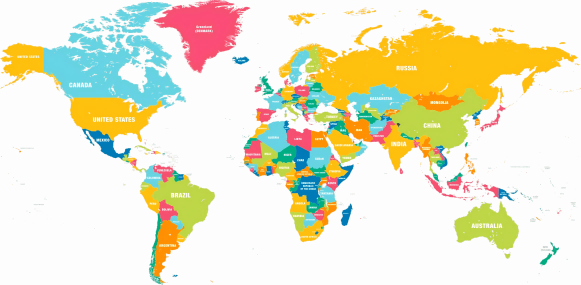
Hongkai equipment is designed, manufactured, and inspected in strict accordance with the requirements of export markets, with particular emphasis on CE certification requirements for the European market (including mechanical safety, electrical safety, and fire performance requirements). Currently, Hongkai equipment has been sold to many overseas markets, including the Middle East, East Asia, South Asia, Southeast Asia, Africa, Europe, and the Americas. The company’s business scope explicitly covers import and export of goods and technology, enabling international settlement under various trade terms such as FOB and CIF, as well as multiple payment methods including T/T and L/C. Leveraging years of overseas service experience, Hongkai provides customers with full-process overseas delivery support from packing and shipment to installation, commissioning, and operator training.
5.Production line flexibility – Rapid changeover to accommodate multi-product orders
The company’s core equipment series includes: SZ stranding and cabling machine, outdoor optical cable sheathing production line, butterfly drop cable production line, flexible optical cable production line, single- and dual-core optical cable sheathing production line, and associated pay-off/take-up devices. The optical cable equipment produced by the company covers the entire process from loose tube stranding, binding and taping, to sheathing extrusion.
The company’s R&D team, led by legal representative Zhou Ximao, has obtained a number of independent patent technologies and possesses full-chain equipment development capabilities ranging from mechanical structure design to electrical control system development. The company’s product R&D has long focused on core technical aspects such as tension control and pitch stability in stranding equipment, continuously promoting the upgrade of optical cable manufacturing equipment toward automation and intelligence.
The company holds complete qualifications for the import and export of goods and technology, and has successfully expanded into numerous overseas markets including the Middle East, East Asia, South Asia, Southeast Asia, Africa, Europe, and the Americas. In response to regional standards and regulatory requirements of different markets, the company provides customers with customized equipment configurations and overseas delivery services, including equipment transportation, overseas installation and commissioning, technical guidance, and operator training, ensuring rapid startup of equipment at overseas production sites.