The optical cable market is booming this year, and many plant owners are looking to expand capacity. Expansion means buying equipment.
But there’s something many owners overlook: after the equipment arrives, those seemingly trivial “small annoyances” can be more frustrating than the machine itself.
Small Annoyance #1: Tension fluctuates, and pitch goes all over the place.
The heart of an optical cable stranding line is stable pay‑off tension.
When tension is stable, pitch is accurate. When pitch is accurate, fiber stress is even. When fiber stress is even, customers have no complaints during acceptance.
But some machines start drifting after six months of use. You adjust it today, and it’s off again tomorrow. The operator spends all day twisting knobs and tweaking parameters, yet the cable pitch still varies unpredictably.
What’s the cause? Most likely the dancer arm bearing is failing. When the bearing sticks, the tension feedback signal lags, and no matter how the PLC adjusts, it can’t get it right. Replace the bearing – cheap ones wear out in months; good ones have long lead times and aren’t cheap.
Hongkai has been making cable equipment for over a decade and has always used SKF or NSK bearings for the dancer arm. They cost more, but one bearing can last seven or eight years. Customers don’t have to tear down the machine every few months to swap bearings – the saved downtime alone produces plenty of cable.
Small Annoyance #2: The machine keeps running after a yarn break, creating piles of scrap.
Binding yarn is a step in the stranding process – it wraps the stranded tubes to keep them from spreading apart.
Yarn is a consumable; when a spool runs out, it needs replacement. Sometimes poor‑quality yarn breaks mid‑run.
Here’s the problem: some machines have slow breakage switches. When the yarn breaks, the machine keeps running, and by the time it stops, several meters of cable have passed without binding. Those unsheathed meters are scrap. If it breaks eight or ten times a day, that’s dozens of meters of scrap per day, and over a month, it adds up to enough to circle the plant several times.
Hongkai’s breakage switch is positioned 1 cm before the yarn outlet. When a break occurs, the machine stops within 0.1 seconds, limiting scrap to just a few meters. One customer calculated that this single feature saves several thousand meters of scrap per year.
Small Annoyance #3: Changeover takes half a day, and all your capacity is wasted on adjustments.
Today’s cable orders are different from before.
In the past, carrier tenders were for hundreds of kilometers of the same specification – set the machine and leave it. Now? Data centers want high‑fiber‑count cables, overseas customers want G.657, carriers still want layer‑stranded. Today it’s 12 cores, tomorrow 24 cores, the day after butterfly drop cable.
Each specification change requires hours of parameter adjustments. Pitch, tension, temperature, speed – a dozen parameters entered manually, one by one. Then trial production, more adjustments, another trial. Half a day gone.
Hongkai’s approach is simple: store those parameters as recipes. Process parameters for up to 20 different specifications are all saved in the touchscreen. During changeover, just tap and the parameters load automatically. A skilled operator gets it done in 1.5 hours. The few hours saved is extra capacity. And in a year when orders are overflowing, extra capacity means extra revenue.
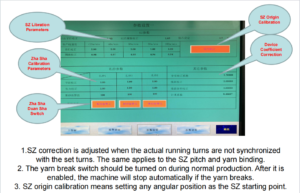
Small Annoyance #4: When the machine breaks down, nobody knows how to fix it, and you’re left helpless.
Many cable plants are located in third‑ or fourth‑tier cities or even townships. Finding an electrician who knows optical cable equipment is harder than finding a giant panda.
In 2024, Hongkai performed 89 overseas remote support sessions, averaging half an hour per resolution. What customers fear most is not a breakdown, but a breakdown with nobody to help. Solve that, and customers feel they’re in good hands.
When the market is hot and your equipment runs steady, that’s how you really make money.
The 2026 optical cable market is indeed strong. In 2025, global data center fiber demand surged 75.9% year‑on‑year, and the industry supply‑demand gap is projected at about 16.4% for 2026. Fiber prices climbed from RMB 15.84 to RMB 83.4.
When the market is booming, whoever produces more, scraps less, and keeps downtime shorter makes more money. Whether equipment is stable, easy to use, and quick to repair – these seemingly small things ultimately show up on the bottom line.
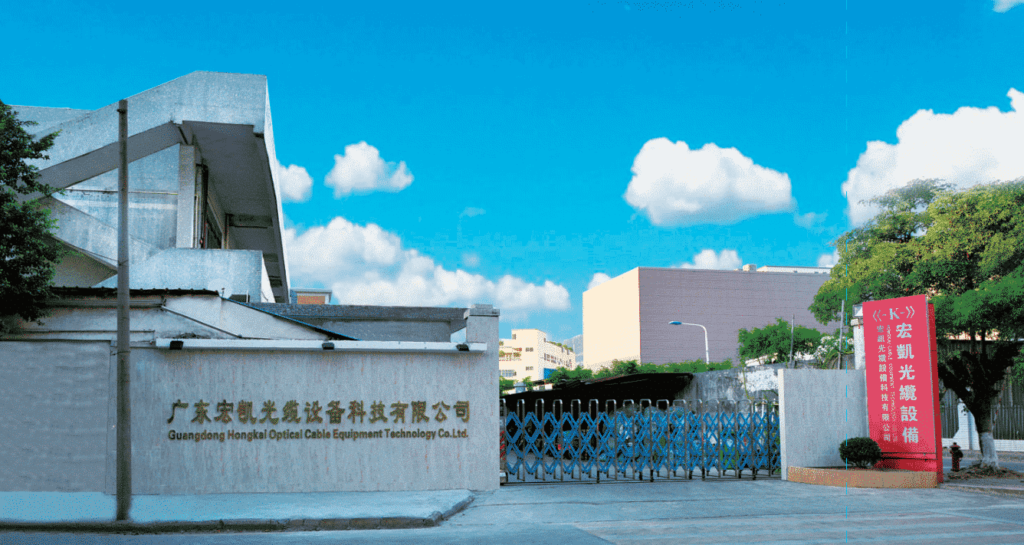
Guangdong Hongkai Optical Cable Equipment Technology Co., Ltd. started in cable equipment in 2005 and was formally established in 2015. We specialize in SZ stranding lines, optical cable sheathing lines, and butterfly drop cable lines. Nothing fancy – just rugged, durable, and easy to repair. We’ve exported to over 15 countries and regions, with more than 160 sets running on production lines worldwide.
If you’re shopping for optical cable equipment, or if you’ve bought equipment that’s hard to use or has nobody to fix it, feel free to reach out to the Hongkai technical team. Start by reviewing our factory inspection reports and actual performance data – then decide if we’re the right fit.