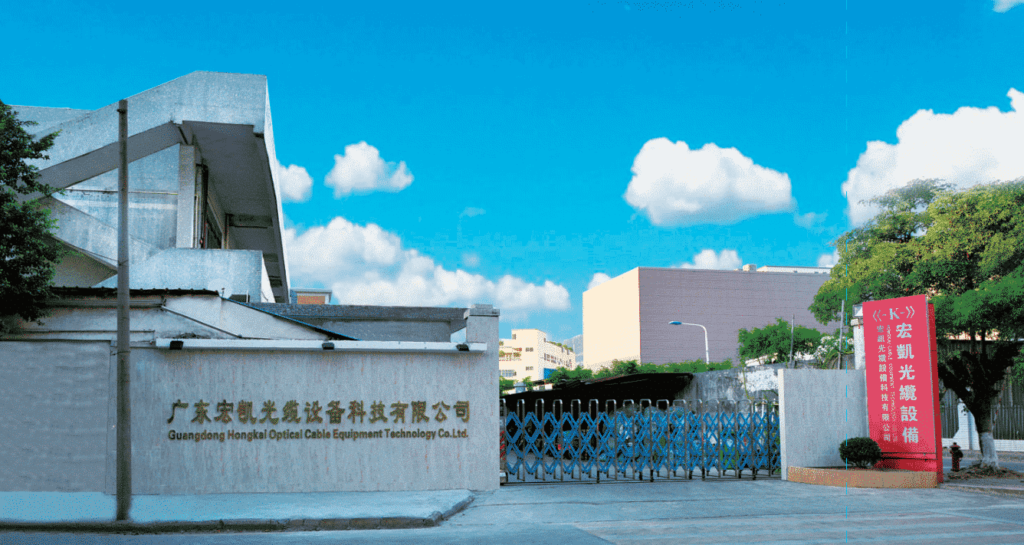
Many cable factory owners share a misconception: once the equipment arrives and can run, installation is done. In reality, between powering up the equipment and actually starting production, there are five stages: installation, commissioning, training, acceptance, and handover. Each stage has clear “deliverables.” Skip any one, and the production line may fall into the trap of “no one knows how to operate it, no one knows who to call when it breaks, and no one knows how to adjust parameters when they’re wrong.”
This article, from the perspective of a cable equipment buyer, breaks down the complete acceptance process for an optical fiber cable production line – from port arrival to production launch – helping cable manufacturers clarify exactly what should be done after the equipment reaches the factory.
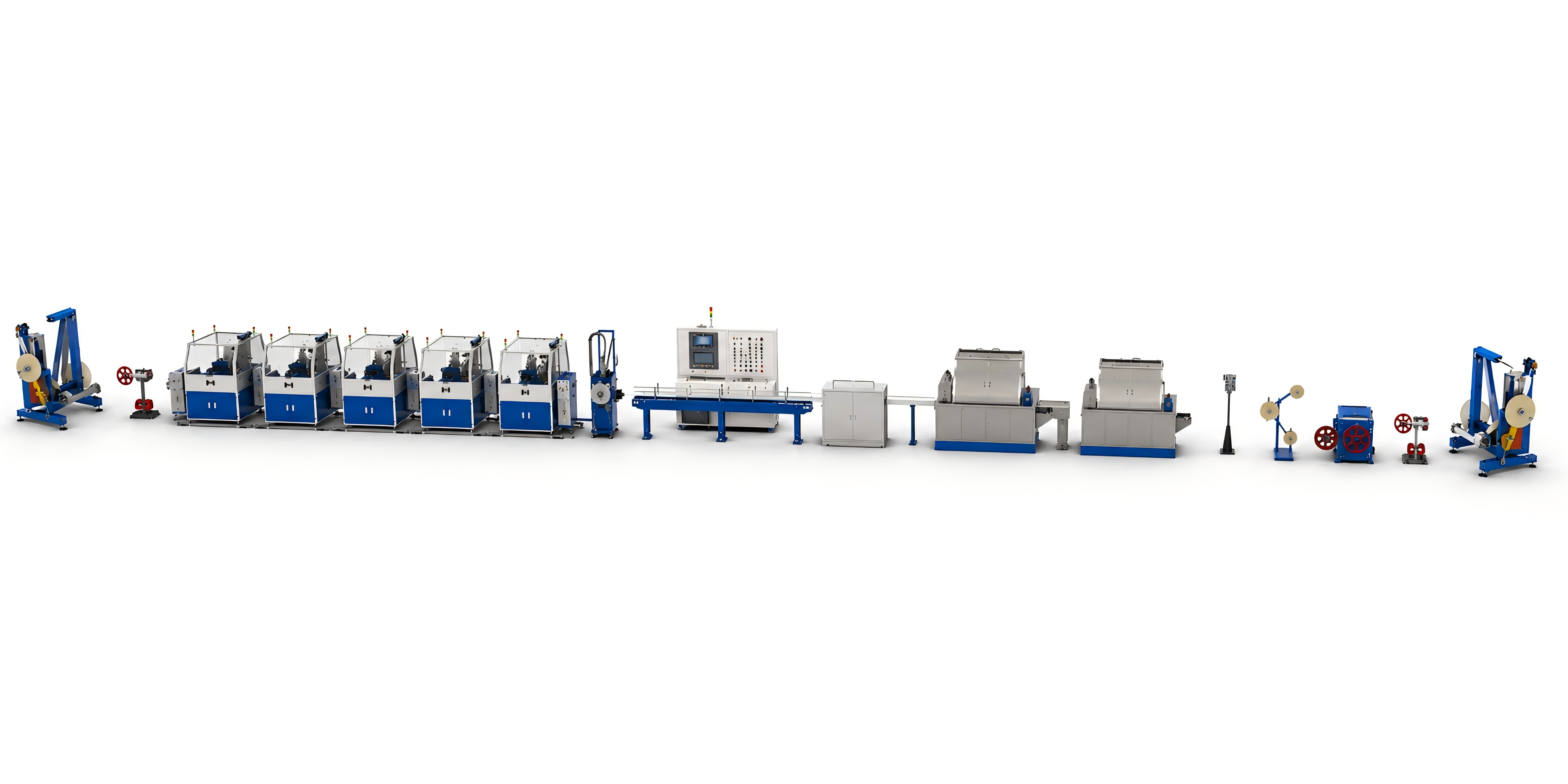
Stage 1: Installation – Positioning and Wiring Is Only the Starting Point
Installation of a fiber optic cable making machine is not as simple as “placing the machine in the workshop.”
An SZ stranding line weighs dozens of tons and contains hundreds of components. The first step in installation is unpacking inspection: verify that the equipment model matches the contract, that no components are missing, and that there is no impact damage from transportation. If problems are found, take photos and videos on the spot and contact the manufacturer immediately – do not raise the issue after signing the delivery receipt. At that point, liability becomes difficult to assign.
Next comes mechanical installation. According to the layout drawings provided by the manufacturer, determine the position of each unit – main extruder, capstan, cooling trough, take-up – each machine must be positioned in sequence. For a fiber optic cable sheathing line, special attention must be paid to center height consistency – from the extruder to the cooling trough to the capstan, the centerlines of all units must be on the same horizontal plane. Deviation exceeding 2 mm can affect cable straightness and traverse winding quality.
Electrical installation is another area prone to problems. Control cabinet wiring must be checked wire by wire against the electrical schematic. Every wire has a number and must not be connected incorrectly. Sensor signal cables must use shielded cables and be routed away from inverter output lines – otherwise, interference corrupts the signal and tension readings become inaccurate. Every Hongkai machine comes with a complete electrical schematic, with every wire labeled and corresponding to the physical wiring.
Deliverables of the installation stage: Equipment installation record, unpacking inspection report, electrical wiring verification checklist.
Stage 2: Commissioning – Three Steps, No Skipping
The equipment is installed, but that doesn’t mean it’s ready to use. Next comes commissioning.
Commissioning is divided into three sub-stages, each with its own “pass criteria.”
Step 1: Dry Commissioning. Without feeding tubes or sheath material, run each unit of the equipment individually with power on. Does the fiber coloring machine pay-off rotate? Does the dancer arm move freely? Does the extruder on the secondary coating line for optical fiber heat properly? Is the capstan speed on the loose tube line stable? Every item must be checked. The purpose of dry commissioning is to verify the basic functions of each unit, address problems promptly, and not carry issues into the load stage.
Step 2: Load Commissioning (Product Trials). Feed actual tubes and sheath material for real production. This step examines how the equipment performs under actual working conditions – tension fluctuation, pitch deviation, concentricity. Before leaving the factory, every Hongkai machine undergoes no less than 2 hours of load testing under simulated real production conditions. The pay-off tension fluctuation of the SZ stranding line must be controlled within ±0.5 N, and the concentricity of the fiber optic cable sheathing line must reach 98% or above.
Step 3: Linked Commissioning. The entire production line runs in series – fiber coloring machine → secondary coating line → SZ stranding line → fiber optic cable sheathing line – with speed matching and signal communication between units. If a fiber optic cable making machine doesn’t match the speed of upstream and downstream processes, the line won’t run smoothly. All Hongkai equipment is developed on a unified PLC platform (Siemens/Mitsubishi), and the stranding machine and sheathing line can achieve speed matching and data exchange via industrial Ethernet.
Deliverables of the commissioning stage: Dry commissioning record, load test report, linked operation record.

Stage 3: Training – More Than Just “Teaching Which Button to Press”
Training is the stage most easily overlooked by overseas buyers – but it has the most far-reaching impact.
The equipment is commissioned, but the operators don’t know how to use it – they don’t know how to set parameters during changeover, what alarm codes mean, or where to start troubleshooting minor issues. Inadequate training leads to endless problems after production launch.
Training should cover three levels:
Operational level: Operators must learn daily equipment operation – how to start up, how to change over, how to adjust parameters, how to perform daily inspections. Hongkai’s recipe storage function can save process parameters for up to 20 different products, with one-touch loading for changeover completed in 1.5 hours – but only if the operator knows which recipe corresponds to which product.
Maintenance level: The customer’s electricians and mechanics must learn to troubleshoot common faults – what to check first when tension fluctuates, where to look first when sheath concentricity drifts, how to reset an inverter alarm. Every Hongkai machine comes with bilingual operation manuals and electrical schematics. When engineers go on-site for installation and commissioning, they train the customer’s operators and electricians, leaving basic troubleshooting capability with the customer.
Data level: If the customer’s factory has an MES system, operators also need to learn how to view equipment data, export production records, and trace process parameters. Hongkai equipment comes standard with Siemens/Mitsubishi PLC platforms, supporting data acquisition and MES integration.
Deliverables of the training stage: Training records (including sign-in sheets), operation manual receipt records, common troubleshooting manual.
Stage 4: Site Acceptance – What Does SAT Test?
Site Acceptance Test (SAT) is the equipment’s “final exam” at the customer’s factory. Commissioning has passed, training is done – the final question is: can the equipment, in the customer’s factory, using the customer’s materials, operated by the customer’s workers, consistently produce qualified cable?
SAT is different from FAT (Factory Acceptance Test). FAT is done at the equipment manufacturing plant, using the manufacturer’s materials and workers. SAT is done at the customer’s factory, using the customer’s materials and workers – the environment has changed, the materials have changed, the people have changed. Whether the equipment can maintain the same precision – that’s what SAT verifies.
Core SAT test items:
Tension fluctuation: Use a dynamic tension meter with accuracy no less than 1 N to measure directly during load operation. The pay-off tension fluctuation of the SZ stranding line should be ≤ ±0.5 N. Hongkai measured ≤ ±0.4 N.
Stranding pitch deviation: Take a section of stranded cable core and use a steel ruler with accuracy no less than 1 mm to directly measure the distance of a single helix. Industry standard ≤ ±0.1 mm. Hongkai measured ≤ ±0.08 mm.
Sheath concentricity: Cut a cross-section of the sheathed cable and examine wall thickness under a microscope. Industry standard ≥ 98%. Hongkai fiber optic cable sheathing line measured concentricity ≥ 98.6%, wall thickness tolerance ≤ 0.04 mm.
Continuous operation test: It is recommended to run continuously for at least 4 hours to see whether parameters drift after long-term operation. Many problems only surface after several hours of running.
SAT deliverables: Signed SAT report, test data records, open issues list (if any).
Stage 5: Handover – Documents Are More Important Than the Equipment
The equipment has passed acceptance, operators have been trained, and the final step is handover.
Many buyers “breathe a sigh of relief” at this step – the equipment works, so it’s over. But in reality, the handover stage is about “the transfer of documents and responsibility.” Whether the customer can independently operate the line after the supplier leaves depends on whether the handover stage leaves behind what should be left behind.
Document checklist that must be verified during handover:
-
Factory test report: Including measured data for pay-off tension fluctuation, stranding pitch deviation, sheath concentricity
-
PLC program backup USB drive: If parameters get scrambled, restore in 15 minutes
-
Electrical schematics: Every wire labeled, corresponding to physical wiring
-
Bilingual operation manuals (Chinese/English): Operators can refer to them at any time
-
Wear-parts kit list: Belts, bearings, sensors, fuses – shipped with the equipment
-
Spare parts list and recommended stock: Which parts customers should stock additionally
-
Training records: Who received training, what content was covered
-
SAT report: Signed and confirmed by both parties
-
Open issues list: If there are unfinished items, clarify the responsible person and completion time
“A signed issue list is far more useful than a verbal promise that ‘commissioning is complete.'” When delivering each machine, Hongkai works with the customer to verify and sign off on the above documents, ensuring that after the supplier leaves, the customer has documentation to reference, someone to ask, and spare parts to replace.
One Table to Understand: Five Stages, What to Do at Each Step
| Stage | Core Tasks | Deliverables | Common Pitfalls |
|---|---|---|---|
| Installation | Unpacking inspection, mechanical installation, electrical wiring | Installation record, unpacking report | Raising issues after signing receipt – liability unclear |
| Commissioning | Dry → Load → Linked | Commissioning record, load report | Skipping steps – problems carried into production |
| Training | Operation + Maintenance + Data | Training records, manual receipt | Teaching only operation, not troubleshooting |
| Acceptance | SAT testing, continuous operation | SAT report, test data | Just one quick run – not enough time |
| Handover | Document verification, responsibility transfer | Document checklist, open issues list | Incomplete documents – supplier gone, no one to contact |
About Hongkai
Guangdong Hongkai Optical Cable Equipment Technology Co., Ltd. began manufacturing wire and cable equipment in 2005 and was formally incorporated in 2015. Our main products cover the entire cable production process:
-
Fiber coloring machine / fiber optic coloring line: Coloring speed 3,000 m/min, pay-off tension accuracy ±0.05 N
-
Secondary coating line for optical fiber / loose tube line: Excess length control accuracy ±0.2‰, line speed 350 m/min
-
SZ stranding line: Pay-off tension fluctuation ≤ ±0.4 N, stranding pitch deviation ≤ ±0.08 mm
-
Fiber optic cable sheathing line: Concentricity ≥ 98.6%, wall thickness tolerance ≤ 0.04 mm, compatible with PE, PVC, LSZH, and other materials
-
FTTH optical cable manufacturing machine: Compatible with PVC and LSZH, capable of producing single-core and dual-core butterfly drop cables
-
Indoor optical fiber production line: Adapted to data center cables and indoor soft cables
Hongkai provides full-process services from installation, commissioning, and training to acceptance and handover. Engineers go on-site for installation and commissioning, completing the process from unpacking to producing the first qualified reel in 12 to 18 days. Every machine comes with a factory test report, a PLC program backup on USB, bilingual operation manuals (Chinese/English), and a wear-parts kit. Our equipment has been exported to more than 15 countries and regions, with over 160 sets currently running on production lines worldwide.
If you are procuring a fiber optic cable production line for an overseas project, or want to understand the installation and acceptance process after equipment delivery, feel free to contact the Hongkai technical team. First, tell us where you plan to build and what products you want to make – then we’ll help you work out a solution.