Last month I went to Vietnam to visit an old customer. “Old customer” – though we’d only known each other for just over two years, we’d collaborated on several projects and had become friends.
His surname is Nguyen. He runs a cable factory in southern Vietnam. Two years ago he bought an SZ stranding line from me, and later a fiber optic cable sheathing line and an FTTH optical cable manufacturing machine. This trip was to see how the equipment was running and talk about capacity expansion.
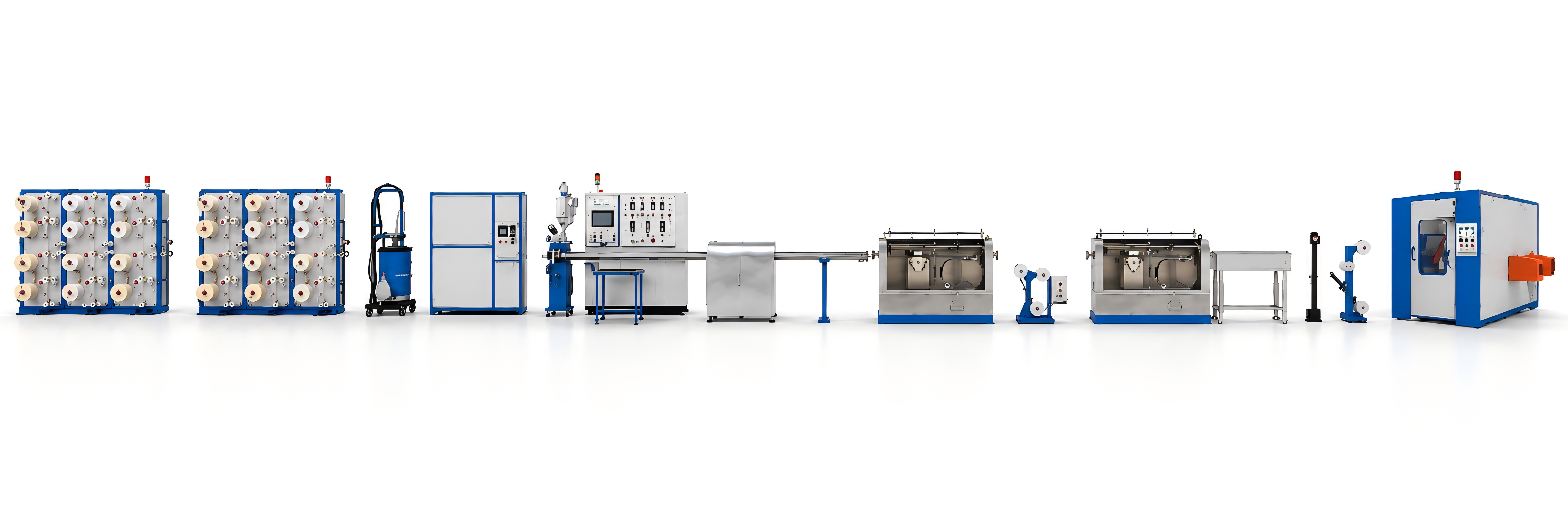
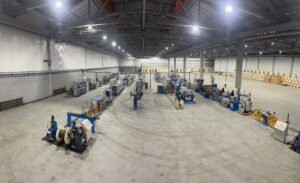
When I arrived at his factory, Mr. Nguyen first took me on a tour of the workshop. The equipment was all running, and the workshop was quite quiet – this fiber optic cable production line had been running for nearly two years. The workers operated it skillfully, changing specifications with just a few taps on the touchscreen.
“Your equipment has one advantage,” Mr. Nguyen said as we walked. “Those young guys of mine can get the hang of it after three days of training. With other equipment we used before, changing a specification took half a day of fiddling. Now, just tap the recipe and it’s done.”
I said that sounded great. He smiled and said there was something he wanted to talk about.

“That Machine of Yours Saved a Deal for Me”
When we sat down for tea, Mr. Nguyen told me a story.
In the second half of last year, he took an order from a data center customer for G.657.A2 bend-insensitive cable. This type of cable has extremely high requirements for sheath concentricity – above 98%. At the time he wasn’t confident, because when he’d used other equipment for G.657 before, the concentricity was always slightly off.
“I gave it a try with your fiber optic cable sheathing line,” he said. “The customer tested it and it passed on the first go.”
He said that data center customer later became a long-term client, with orders every month. G.657.A2 commands a much higher price than ordinary cable, and this deal earned him a lot.
“That laser diameter gauge on your sheathing line really works,” he said. “Before, we relied on the master technician’s feel to adjust concentricity – half a day of adjustment and it still might not be accurate. Now the equipment watches and adjusts itself; I just look at the screen.”
I told him that the sheathing line’s measured concentricity was 98.6%, with wall thickness tolerance ≤ 0.04 mm. The laser diameter gauge has 0.2 μm accuracy – if the sheath outer diameter deviates by 0.01 mm, it detects it and the PLC automatically adjusts the extruder speed to bring it back. He nodded and said he couldn’t remember the data, but he could see the results.
“Fast Changeover Is Capacity”
When we got to the topic of expansion, Mr. Nguyen asked me: “I want to add another line. What do you think I should add?”
I asked him what products his current line was running and where the bottleneck was.
He said the orders were too varied now – 12-fiber loose tube today, 24-fiber tomorrow, butterfly drop cable the day after. Fortunately, the equipment changed over quickly – just tap the recipe and it loads. But the front-end fiber coloring machine and secondary coating line for optical fiber couldn’t keep up with the back-end speed; sometimes the back end had to wait for material from the front end.
I said he might consider adding a loose tube line to boost front-end capacity. Or upgrade the existing fiber optic coloring line to increase coloring speed.
He thought about it and said he’d add a loose tube line first – the front end was indeed the bottleneck.
“You know,” he said, “I’ve been making cable for over a decade. Before, when buying equipment, I only cared about price. Not anymore.”
“What do you care about now?”
“Whether changeover is fast, whether precision is stable, and whether there’s someone to help when it breaks down,” he said. “Your SZ stranding line has been running for two years, and the pitch deviation is still within ±0.08 mm. I have to hand it to you.”
I said that’s because the differential gears use high-frequency hardening plus precision grinding, with hardness HRC 50–55 – one set lasts eight to nine years. The bearings are SKF. You can’t see these things when you buy, but you find out whether they’re worth it when you use them.
“Chinese Equipment Is Different from Before”
At dinner that evening, Mr. Nguyen said something that stuck with me.
He said: “Before, when we bought equipment, our first choice was Japanese or European. Now it’s different – Chinese equipment has a good price-performance ratio and good service.”
He said a friend of his who runs a cable factory in Thailand also uses Chinese equipment. People used to think Chinese equipment was “cheap but not good.” That impression is changing.
“Your indoor optical fiber production line – a friend of mine wants to buy one too,” he said. “He makes indoor cable. He used European equipment before – expensive, and after-sales was slow. Waiting for a spare part took a month. Your spare parts arrive by DHL in three days – that’s a huge difference.”
I said every machine we ship comes with a wear-parts kit – belts, bearings, sensors, fuses. For major parts, DHL delivery within three days. Remote video support with a two-hour response during working hours.
Mr. Nguyen nodded and said that’s the right approach. Equipment can’t avoid breaking down; the key is having someone to help when it does.
Thoughts on the Way Back
On the flight back from Vietnam, I thought about it the whole way.
I’ve been in the cable equipment business for over a decade. Before, the question customers asked most was “How much?” Now the questions they ask most are “What’s the precision?” “How long is changeover?” “What if it breaks down?”
That change is good. It shows people are no longer fixated only on purchase price – they’re starting to calculate the long-term account.
A fiber optic cable making machine may be quoted a few tens of thousands cheaper, but if it costs an extra 20,000 a year in electricity, 15,000 more in maintenance, and 50,000 more in scrap losses – over three years, the cheap equipment ends up more expensive.
An SZ stranding line with stable precision, fast changeover, and support when something goes wrong – it’s easier to run and produces more. When customers can do the math, they naturally choose reliable equipment.
About Hongkai
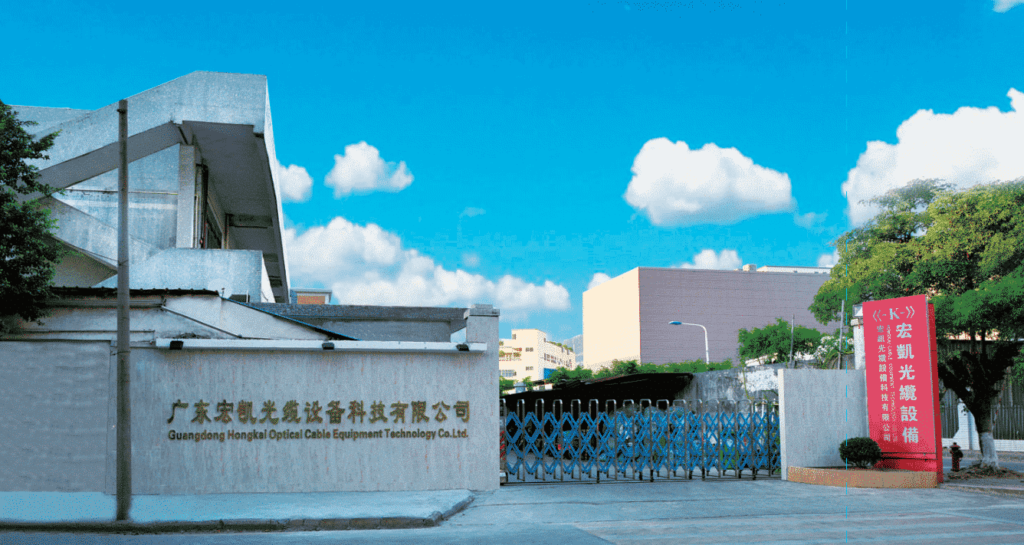
Guangdong Hongkai Optical Cable Equipment Technology Co., Ltd. began manufacturing wire and cable equipment in 2005 and was formally incorporated in 2015. Our main products cover the entire cable production process:
-
Fiber coloring machine / fiber optic coloring line: Coloring speed 3,000 m/min, pay-off tension accuracy ±0.05 N
-
Secondary coating line for optical fiber / loose tube line: Excess length control accuracy ±0.2‰, line speed 350 m/min
-
SZ stranding line: Pay-off tension fluctuation ≤ ±0.4 N, stranding pitch deviation ≤ ±0.08 mm
-
Fiber optic cable sheathing line: Concentricity ≥ 98.6%, wall thickness tolerance ≤ 0.04 mm
-
FTTH optical cable manufacturing machine: Compatible with PVC and LSZH, capable of producing single-core and dual-core butterfly drop cables
-
Indoor optical fiber production line: Adapted to data center cables and indoor soft cables
Every machine comes with a factory test report, a PLC program backup on USB, bilingual operation manuals (Chinese/English), and a wear-parts kit. Our equipment has been exported to more than 15 countries and regions, with over 160 sets currently running on production lines worldwide.
If you are procuring an optical fiber cable production line for an overseas project, or if your equipment has a problem you don’t know how to solve, feel free to contact the Hongkai technical team. Tell us what you’re dealing with, and we’ll see if we can help.