This year, global fiber optic cable production capacity is accelerating its outward dispersion. News of newly built cable factories in the Middle East, Southeast Asia, Africa, Eastern Europe, and elsewhere keeps coming. Every new factory means procurement demand for a fiber optic cable production line.
But after equipment goes into production, factories face a common practical problem: spare parts management.
A sensor fails, a bearing wears out – if you can’t find a replacement of the same specification locally, you have to wait for the supplier to ship from China. DHL takes 3 to 5 days; sea freight takes 20 to 25 days. A week of downtime costs tens of thousands in lost output. A part costing a few dozen dollars can bring a line producing tens of thousands of meters per day to a standstill for days.
This article outlines the spare parts that most need to be kept on hand for an optical fiber cable production line, and how overseas factories can build an efficient spare parts management system.

1. Which Spare Parts Wear Out Most Easily? Categorized by Equipment
1. Fiber Coloring Machine / Fiber Optic Coloring Line
-
UV-LED curing lamps: Curing effectiveness declines after lifespan expires; periodic replacement required
-
Tension wheel bearings: Long-term high-speed operation; increased tension fluctuation after wear
-
Guide wheels: Fiber friction causes grooves; periodic inspection and replacement required
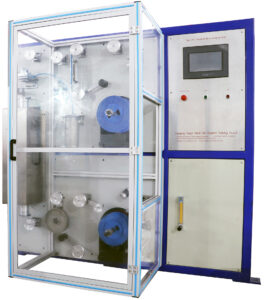
2. Secondary Coating Line for Optical Fiber / Loose Tube Line
-
Extruder heater bands: Consumables; replace one batch every six months to a year
-
Thermocouples: Critical for temperature control; temperature runs out of control after damage
-
Capstan belts: Slippage after wear, affecting line speed stability
-
Gel seals: Leakage after aging, affecting filling quality
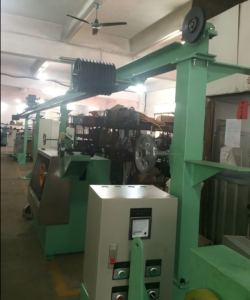
3. SZ Stranding Line
-
Dancer bearings: SKF/NSK bearings; inaccurate tension feedback after wear
-
Yarn breakage switches: Critical component of the binder; if damaged, the machine won’t stop when yarn breaks
-
Ceramic guide wheels: Yarn friction causes grooves; periodic replacement required
-
Proximity switches: Used for position detection; abnormal reversal after damage
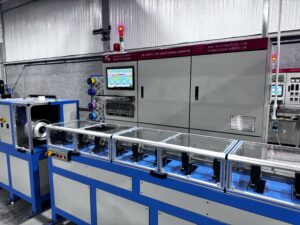
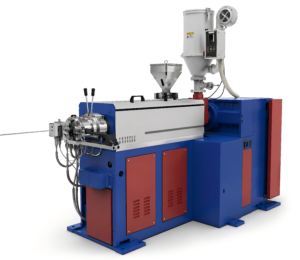
4. Fiber Optic Cable Sheathing Line
-
Extruder screw: Long-term high-temperature wear; periodic re-grinding or replacement required
-
Heater bands: Consumables; replace every six months to a year
-
Laser diameter gauge lens: Readings drift after contamination; clean or replace
-
Capstan belts / pressure rollers: Slippage after wear, affecting outer diameter stability
5. FTTH Optical Cable Manufacturing Machine
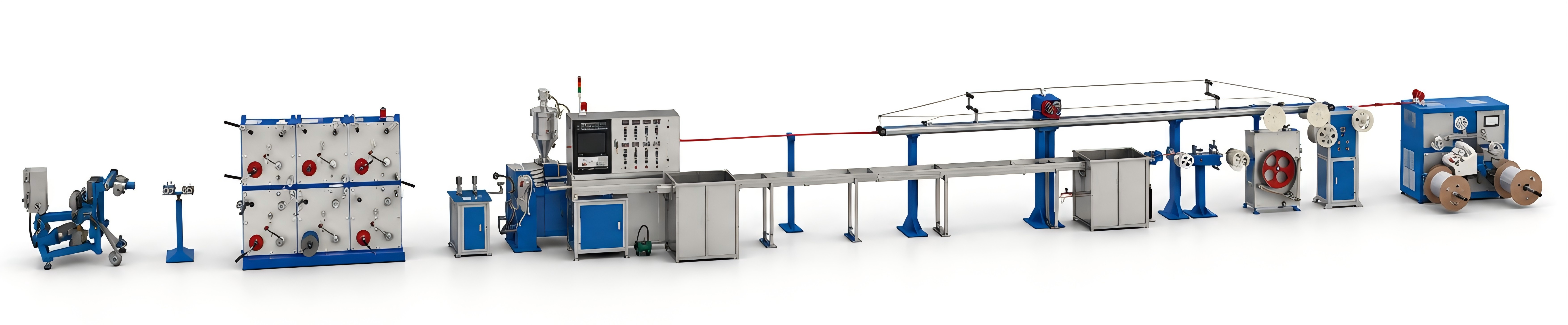
-
Butterfly die: Cross-section dimensions change after wear
-
Strength member pay-off tension wheels: Unstable tension after wear
-
Take-up reel locking pins: Take-up slippage after wear
6. Indoor Optical Fiber Production Line
-
Tight buffer die: Uneven tight buffer thickness after wear
-
Pay-off tension wheels: Critical components for bare fiber tension control
-
Take-up traverse: Irregular winding after wear
2. How to Set Spare Parts Inventory? Classify by “Criticality” and “Procurement Lead Time”
Not all spare parts need to be kept in stock. Too much inventory ties up capital; too little means waiting for parts during downtime. It is recommended to classify by two dimensions:
High criticality + Long procurement lead time → Must keep in stock
-
Extruder screws, differential gears, laser diameter gauge lenses
-
If these are damaged, the equipment cannot run, and procurement lead times are long
High criticality + Short procurement lead time → Keep moderate stock
-
Sensors, proximity switches, yarn breakage switches, heater bands
-
International brand components (Siemens/Mitsubishi/Schneider) can be procured locally, but it is recommended to keep 1–2 pieces
Low criticality + Short procurement lead time → Buy as needed
-
Belts, fasteners, seals
-
Available from local hardware markets; no need to stock heavily
3. Hongkai’s Spare Parts Support System: So Overseas Customers “Don’t Wait for Parts”
First, standard wear-parts kits are shipped with the equipment.
Every Hongkai fiber optic cable making machine comes with a standard wear-parts kit – belts, bearings, sensors, fuses – shipped together with the equipment to the customer’s factory. Customers can start production as soon as they receive the equipment, with commonly used spare parts already at hand.
Second, key components are selected from globally available brands.
Hongkai equipment uses Siemens/Mitsubishi PLCs, Siemens/Schneider low-voltage components, and ABB/Inovance drives for major electrical parts – these brands have distribution networks worldwide, so customers can buy replacement parts locally. Bearings use SKF or NSK, with stock available in major global markets.
Third, spare parts arrive via DHL within three days.
For spare parts that need to be shipped from China, Hongkai uses DHL express, with delivery in 3 to 5 working days. Urgent spare parts can be arranged via priority air freight channels.
Fourth, remote diagnostics reduce “wrong part replacement.”
Sometimes an equipment alarm is not a hardware failure – it’s a wrong parameter or a dirty sensor. Hongkai equipment can optionally be equipped with a remote access module (with customer authorization), allowing engineers to remotely view operating status and diagnose alarm causes. In 2024, Hongkai completed 89 overseas remote video support sessions, with an average resolution time of 32 minutes per session. All machines on the fiber optic cable production line – fiber coloring machine, secondary coating line for optical fiber, loose tube line, SZ stranding line, fiber optic cable sheathing line, FTTH optical cable manufacturing machine, indoor optical fiber production line – support remote diagnostics.
4. Spare Parts Management Checklist for Overseas Buyers
-
After equipment arrives, verify the wear-parts kit list: Confirm that the models and quantities of spare parts shipped with the equipment are correct.
-
Establish a spare parts ledger: Record the installation location, replacement date, and service life of each spare part.
-
Set minimum stock alerts: Replenish critical spare parts promptly when they fall below safety stock.
-
Train local electricians: Ensure electricians master common troubleshooting and spare part replacement methods.
-
Confirm locally available brands with the supplier: Which components can be bought in the local market, and which must be shipped from China.
-
Keep remote support channels open: When equipment alarms, diagnose remotely first, then decide whether to replace parts.
📩 Get Your Customized Spare Parts List and Plan
If you are procuring a fiber optic cable production line for an overseas project, or want to learn about the spare parts list and inventory recommendations for specific equipment, feel free to contact the Hongkai technical team.
Just tell us three things:
-
What type of cable do you want to make? (Loose-tube / FTTH / indoor cable)
-
Where will the factory be built? (This affects voltage system and local spare parts procurement conditions)
-
Approximately what capacity? (How many kilometers per month or per year)
We will provide a preliminary equipment configuration proposal, spare parts list, and quotation within 5 working days.
📧 Email: sales2@hkofcmachine.com
🌐 Website: https://hkofcmachine.com/