Data shows that global total demand for optical fiber and cable in 2026 is expected to reach 577 million fiber‑kilometers, while effective global supply is only about 397 million fiber‑kilometers, resulting in a supply‑demand gap of 180 million fiber‑kilometers for the full year, a shortfall of approximately 16.4%. In April 2026, the global fiber price index climbed to 107.2, marking the first double‑digit monthly increase since 2021. Since May 2025, the cumulative price increase for G.652.D bare fiber has exceeded 400%, and G.657.A2 has risen even higher, by 600%. With orders fully booked and prices soaring, this is undeniably a “golden era” for optical cable manufacturers. But one issue is often overlooked: can production lines run 24/7 without stopping?

I. The “Hidden Killer” in High-cycle Periods: Unplanned Downtime
In a high-cycle period, every minute of downtime on an optical cable production line means real financial loss. For a line with an annual capacity of 3,000 km of cable, based on the current price of G.652.D bare fiber at RMB 83.4 per fiber‑kilometer, one hour of downtime can result in tens of thousands of yuan in lost output. However, many cable plants focus only on “how much does it cost to buy” when purchasing equipment, ignoring “how stable is it during operation.” Digital twin technology has been implemented in multiple cable manufacturers, improving Overall Equipment Effectiveness (OEE) by 15%–20% and reducing unplanned downtime by 30%. In FiberHome’s cable production, equipment data collection coverage has reached 100%, boosting overall production efficiency by 20%. These figures show that in a high‑cycle period, equipment stability and maintainability matter more than purchase price.
Common causes of unplanned downtime for optical cable manufacturers include:
Tension fluctuations leading to scrap accumulation: Unstable pay‑off tension control causes stranding pitch deviation beyond tolerance, requiring mid‑run adjustments.
Frequent yarn breakage: Unreasonable tension zoning for yarns or worn ceramic guide wheels lead to breaks several times per hour.
Sheath concentricity drift: Concentricity gradually deviates during extrusion, necessitating stopping for realignment.
Inaccurate length measurement: Worn or slipping measuring wheels cause length disputes with customers upon delivery.
No spare parts for wear‑prone components: Critical parts fail unexpectedly, with no local source, resulting in days of line stoppage.
II. Three Levels of Equipment Maintenance: From “Fire‑fighting” to “Fire‑prevention”
Based on Hongkai’s overseas service experience, we classify equipment maintenance into three levels:
Level 1: Reactive Maintenance (Breakdown Repair)
Fix only after breakdown. This is the most common model, but it carries the highest cost during high‑cycle periods – including lost production, emergency purchase premiums, and customer order delays. The industry trend is shifting from “breakdown repair” to “predictive maintenance,” with 5G gateways collecting real‑time operating parameters and leveraging fault knowledge graphs for remote diagnostics and life prediction.
Level 2: Preventive Maintenance (Scheduled Servicing)
Perform regular replacement of wear parts, cleaning of sensors, and lubrication according to the maintenance schedule provided by the equipment manufacturer. Hongkai supplies a Maintenance Manual with each machine, clearly indicating recommended replacement cycles for all components, along with a standard wear‑parts kit. Most unplanned downtime can be avoided through preventive maintenance.
Level 3: Predictive Maintenance (Data‑driven)
Predict faults before they occur by analyzing operating data such as vibration, temperature, current, and tension fluctuation trends, and schedule maintenance proactively. Hongkai equipment comes standard with Siemens/Mitsubishi PLC platforms, supporting OPC UA/SQL interfaces for MES integration, enabling real‑time data acquisition for predictive maintenance.
III. Real‑world Challenges for Overseas Optical Cable Manufacturers
For overseas cable manufacturers, equipment maintenance challenges are even more pronounced:
Long spare‑parts lead times: A critical component failure on a stranding line may not be locally available. Shipping from China – 3–5 days by air, 20–25 days by sea – means the line could be down for weeks.
Shortage of technical personnel: Local repair technicians for cable equipment are scarce in regions such as the Middle East, Africa, and Southeast Asia; when faults occur, operators often must wait for remote support or on‑site dispatch.
High operator turnover: Inexperienced new employees often misadjust parameters or perform incorrect operations – accounting for as high as 42% of faults (based on Hongkai’s 2024 overseas service statistics).
Language and standard differences: Operation manuals are in Chinese only; electrical schematics may not meet local standards; high communication costs during installation and commissioning.
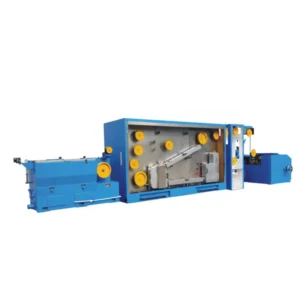
IV. How Hongkai Helps Overseas Customers Achieve “Non‑stop” Production
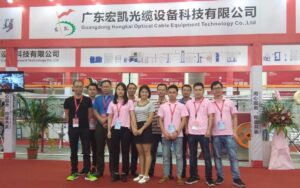
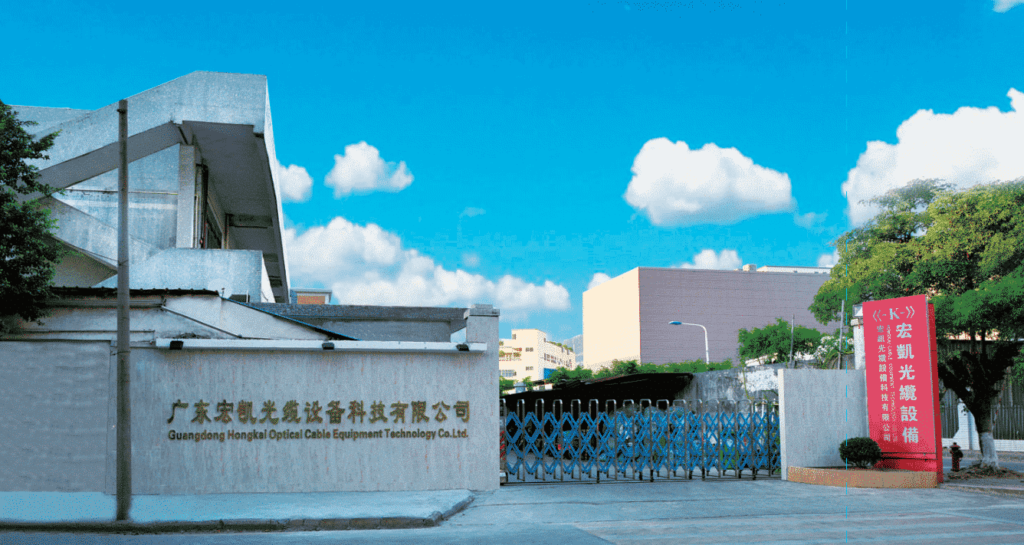
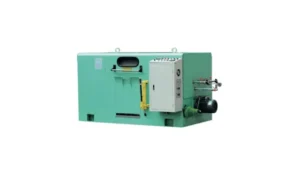
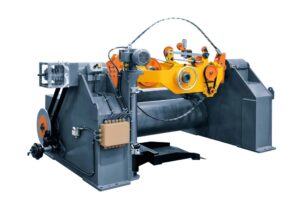
Guangdong Hongkai Optical Cable Equipment Technology Co., Ltd., established in 2015 (with origins dating back to 2005), specializes in optical cable manufacturing equipment – SZ stranding lines, outdoor cable sheathing lines, drop cable (butterfly) lines, and plastic tube production lines. To address the long‑term operational needs of overseas customers, Hongkai has built a four‑dimensional support system:
Dimension 1: Equipment Stability by Design
All Hongkai equipment undergoes no less than 2 hours of no‑load and load testing before delivery, with measured results:
| Parameter | Performance |
|---|---|
| Pay‑off tension fluctuation | ≤ ±0.4 N (at 20 m/min line speed) |
| Stranding pitch deviation | ≤ ±0.08 mm |
| Average sheath concentricity | 98.6% |
| Sheath wall thickness tolerance | ≤0.04 mm (nominal 1.8 mm) |
Key mechanical components (differential gearbox gears, dancer bearings) are designed with high wear resistance – gears are high‑frequency hardened (HRC 50‑55) and precision‑ground; bearings are international brands such as SKF/NSK. Major electrical components use Siemens/Mitsubishi PLC, Siemens/Schneider low‑voltage devices, with global warranties and local availability.
Dimension 2: Preventive Maintenance “Toolkit”
Each equipment delivery includes:
-
Bilingual (Chinese/English) Operation and Maintenance Manual (including daily checklist, weekly maintenance items, monthly maintenance plan)
-
Standard wear‑parts kit (belts, bearings, ceramic guide wheels, proximity switches, fuses, etc. – 8 types)
-
Electrical schematics and PLC program backup (USB drive)
-
Fault code quick‑reference table (built into the touchscreen)
Dimension 3: Remote Diagnostics and Rapid Response
Hongkai provides three response channels:
| Channel | Details |
|---|---|
| Online document library | Immediate access to operation manuals and troubleshooting guides |
| Remote video support | Response within 2 working hours; guidance via WeChat/WhatsApp video calls (89 sessions in 2024, 83% one‑call resolution) |
| On‑site engineer dispatch | 7‑15 working days (subject to visa); 12‑18 days from arrival to trial production |
Dimension 4: Fast Spare‑Parts Shipment System
| Spare Part Type | Stock Location | Shipping Method | Delivery Time (to SE Asia/Middle East) |
|---|---|---|---|
| Common electrical parts | Dongguan HQ | DHL express | 3‑5 working days |
| Inverters, PLCs | Dongguan HQ | DHL express | 3‑5 working days |
| Mechanical components | Dongguan HQ | Air or sea freight | Air 5‑7 days, Sea 20‑25 days |
V. Equipment Selection Checklist for “Long‑term Operation”
If you are planning to build or expand optical cable production lines, we recommend adding the following evaluation dimensions during equipment selection:
| Evaluation Item | Specific Questions |
|---|---|
| Equipment stability | Can the supplier provide factory test reports (actual tension, pitch, concentricity data)? |
| Maintenance convenience | Can routine daily inspections be completed within 30 minutes? Are special tools needed for wear‑part replacement? |
| Spare parts accessibility | Are critical components internationally standardised (locally purchasable)? Does the supplier offer a spare‑parts kit? |
| Technical support | Are bilingual operation manuals provided? Is remote video diagnostics supported? Does the supplier have overseas delivery experience? |
| Data traceability | Can the equipment record operating parameters? Can it interface with MES for predictive maintenance? |
VI. About Guangdong Hongkai
Guangdong Hongkai Optical Cable Equipment Technology Co., Ltd., located in Humen Town, Dongguan City, Guangdong Province, focuses on SZ stranding lines, outdoor cable sheathing lines, butterfly drop cable lines, and plastic tube production lines. Our equipment has been exported to more than 15 countries and regions across the Middle East, Southeast Asia, South Asia, Africa, and Europe, with cumulative deliveries exceeding 160 sets. We not only provide equipment but also a complete support system to keep your lines running without unplanned stops. For detailed equipment specifications, factory test reports, or maintenance support plans, please feel free to contact the Hongkai technical team.