The first step in procuring a fiber optic cable production line is not asking for a price – it’s writing down clearly “what exactly you want.”
A clear, complete Technical Specification helps equipment suppliers quote accurately, reduces back-and-forth communication, and avoids the awkward situation of equipment that “doesn’t match” after arriving at the factory. This article, from the perspective of overseas buyers, outlines what a complete optical fiber cable production line technical specification should contain, helping cable manufacturers clarify their procurement requirements.
1. First, Clarify: What Cable Products Will You Make?
The first part of the technical specification must clearly state your product positioning.
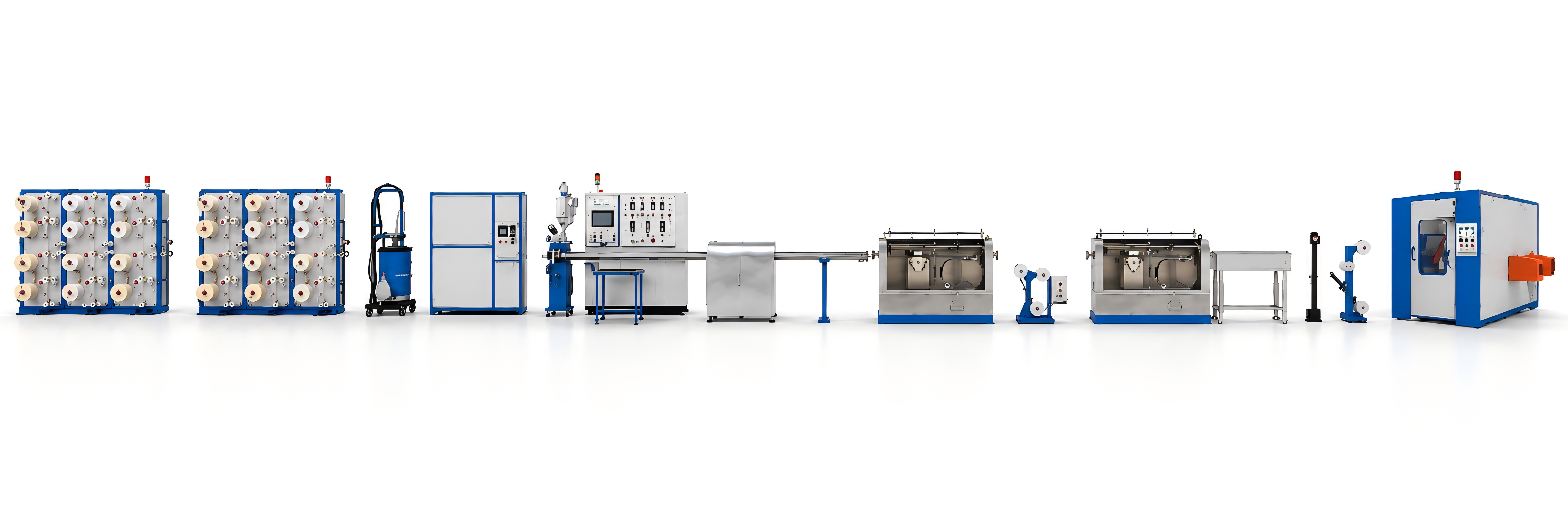
Loose-tube outdoor cable: Requires a fiber coloring machine, secondary coating line for optical fiber or loose tube line, SZ stranding line, and fiber optic cable sheathing line.
FTTH butterfly drop cable: Requires an FTTH optical cable manufacturing machine – the core component is the extrusion die.
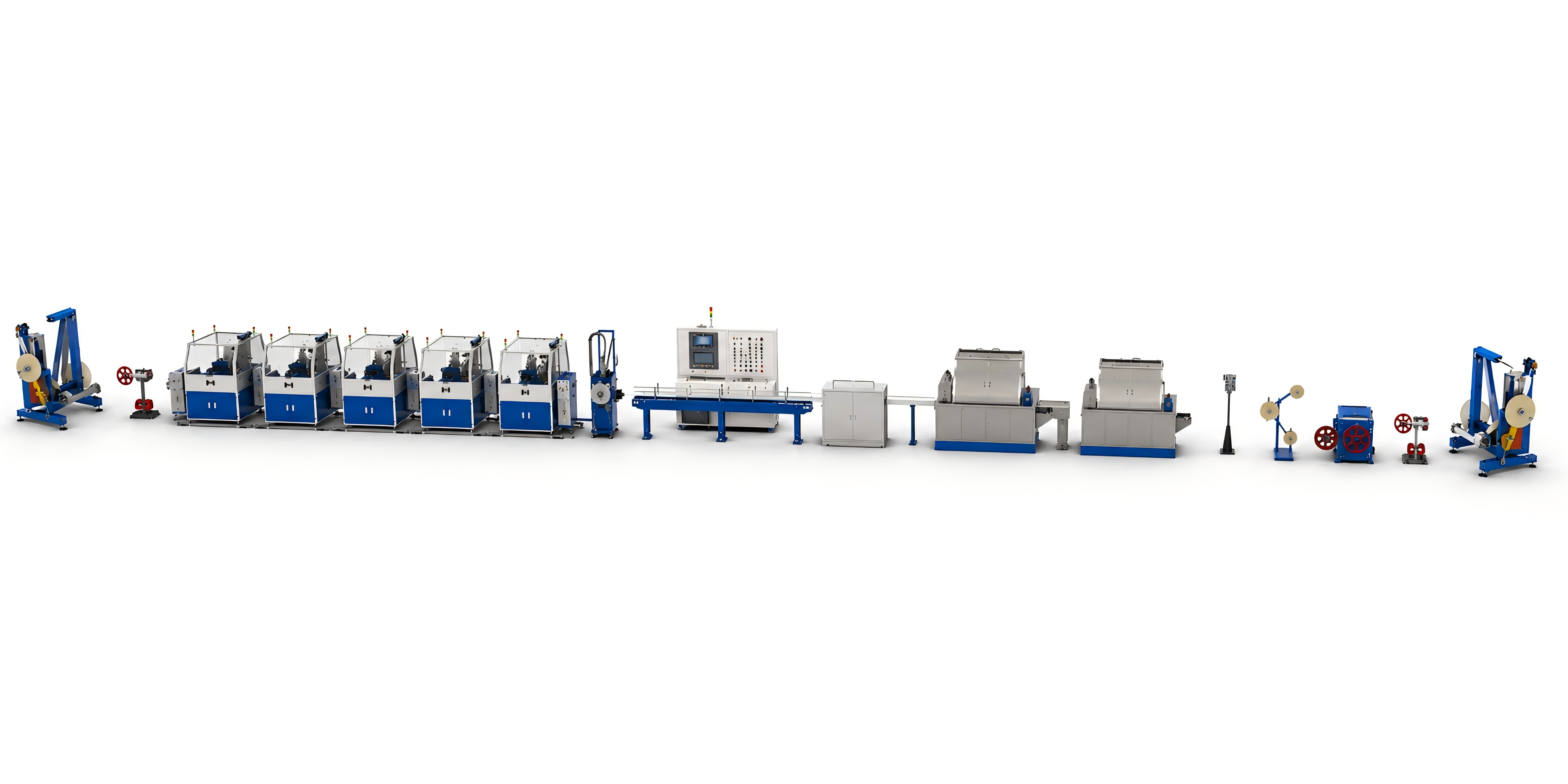
Indoor cable: Requires an indoor optical fiber production line, including a tight-buffered fiber production line and a soft cable production line.
If one fiber optic cable making machine is to accommodate multiple products, the specification should note “compatibility requirements” and specify the maximum changeover time.
2. How to Write the Technical Parameters for Core Equipment?
1. Fiber Coloring Machine / Fiber Optic Coloring Line
Parameters to specify include: coloring speed (m/min), pay-off tension range and accuracy (N), UV curing method (traditional mercury lamp or UV-LED), applicable fiber diameter (μm), take-up reel specifications.
2. Secondary Coating Line for Optical Fiber / Loose Tube Line
Parameters to specify: line speed (m/min), excess length control accuracy (‰), applicable tube materials (PBT/PP/PE/nylon), extruder screw L/D ratio, pay-off and take-up tension range and accuracy, producible tube diameter range (mm).
3. SZ Stranding Line
Parameters to specify: maximum tube count (reels), pay-off tension fluctuation (N), stranding pitch range (mm) and deviation (mm), stranding angle range, maximum cable core outer diameter (mm), take-up reel specifications.
4. Fiber Optic Cable Sheathing Line
Parameters to specify: extruder screw material and heat treatment process, applicable sheath materials (PE/PVC/LSZH, etc.), concentricity requirement (%), wall thickness tolerance (mm), whether a laser diameter gauge is included and its accuracy (μm), line speed (m/min).
5. FTTH Optical Cable Manufacturing Machine
Parameters to specify: producible fiber counts (single-core/dual-core/multi-core), butterfly cross-section dimensional tolerance, strength member type (steel wire/FRP), extrusion material compatibility (PVC/LSZH), pay-off and take-up reel specifications.
6. Indoor Optical Fiber Production Line
Parameters to specify: tight buffer layer thickness range (mm), tight-buffered diameter (mm), pay-off tension range and accuracy (N), applicable sheath materials, line speed (m/min).

3. Electrical and Compliance Requirements
Overseas buyers should specify in the technical specification:
-
Voltage and frequency: North America 480V/60Hz, Europe 400V/50Hz, Southeast Asia 230V/50Hz.
-
Certification requirements: CE (EN 60204-1), UL, RoHS.
-
Document language: Bilingual operation manuals (Chinese/English), electrical schematics, factory test report.
-
Major electrical component brands: It is recommended to specify international brands (Siemens, Mitsubishi, Schneider, ABB) for ease of local procurement and replacement.
4. Delivery and Service Requirements
-
Delivery lead time: From contract effectiveness to factory release – how many days are expected?
-
Installation and commissioning: Will the supplier dispatch engineers on-site? How many days on-site?
-
Training: Operator training, maintenance training, data management training.
-
Spare parts: Is a standard wear-parts kit included? Shipping method and arrival time for spare parts.
-
Remote support: Is remote diagnostics supported? What is the response time?
5. Acceptance Criteria
-
Factory test report: Should include measured data for pay-off tension fluctuation, stranding pitch deviation, sheath concentricity, and more.
-
Site Acceptance Test (SAT): Continuous operation duration, product sampling inspection, operator independent operation assessment.
-
Document handover checklist: PLC program backup USB drive, electrical schematics, bilingual operation manuals (Chinese/English), wear-parts list.
6. How Much Communication Cost Can a Good Technical Specification Save You?
Many overseas buyers, when procuring a fiber optic cable production line, simply write “we need a cable production line” – and end up with wildly varying quotations. Some suppliers quote a stranding machine, some quote a sheathing line, some quote the full set. After weeks of back-and-forth, things are still unclear.
A clear technical specification enables suppliers to provide an accurate configuration proposal on the first quotation, reducing the time spent on repeated confirmation. For overseas customers racing to meet factory construction schedules, time is cost.
7. Need a Technical Specification Template?
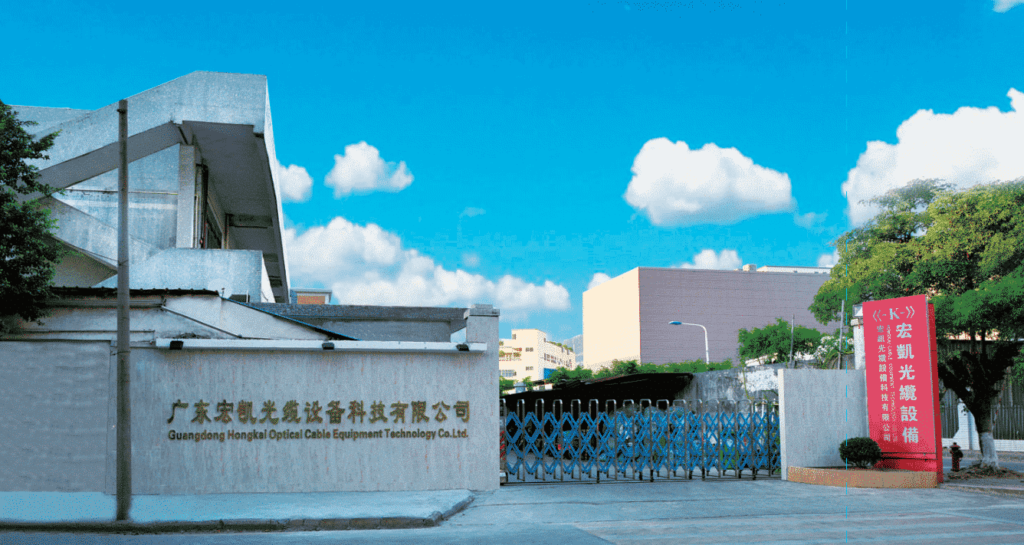
Guangdong Hongkai Optical Cable Equipment Technology Co., Ltd. began manufacturing wire and cable equipment in 2005 and was formally incorporated in 2015. Our main products cover the entire cable production process: fiber coloring machine, secondary coating line for optical fiber, loose tube line, SZ stranding line, fiber optic cable sheathing line, FTTH optical cable manufacturing machine, and indoor optical fiber production line.
Hongkai can provide a technical specification template upon request from overseas customers, and recommend equipment configuration proposals based on the customer’s product positioning. Every machine comes with a factory test report – pay-off tension fluctuation, stranding pitch deviation, sheath concentricity – all listed. A PLC program backup on USB, bilingual operation manuals (Chinese/English), and a wear-parts kit are shipped with the equipment. Our equipment has been exported to more than 15 countries and regions, with over 160 sets currently running on production lines worldwide.
If you are procuring an optical fiber cable production line for an overseas project, or need a technical specification template for reference, feel free to contact the Hongkai technical team. First, tell us what products you want to make and where your factory is located – then we’ll help you work out a solution.