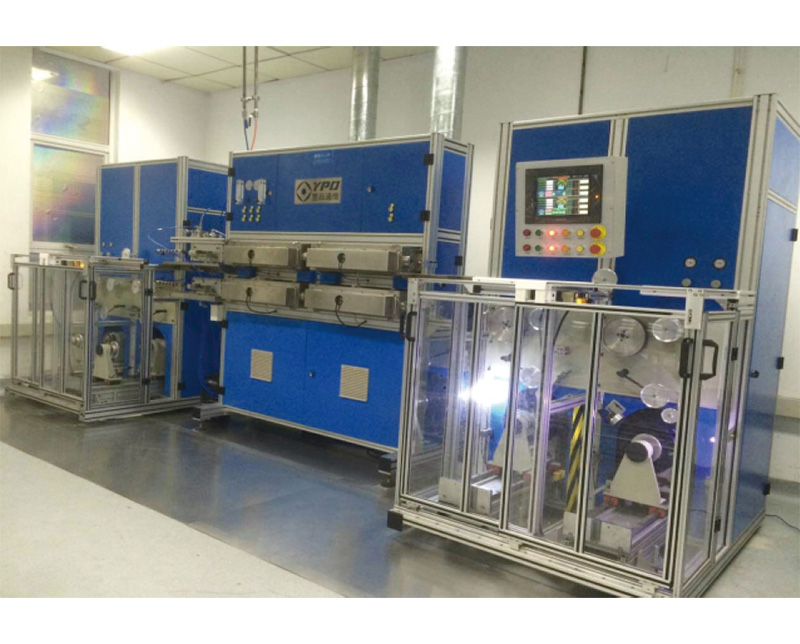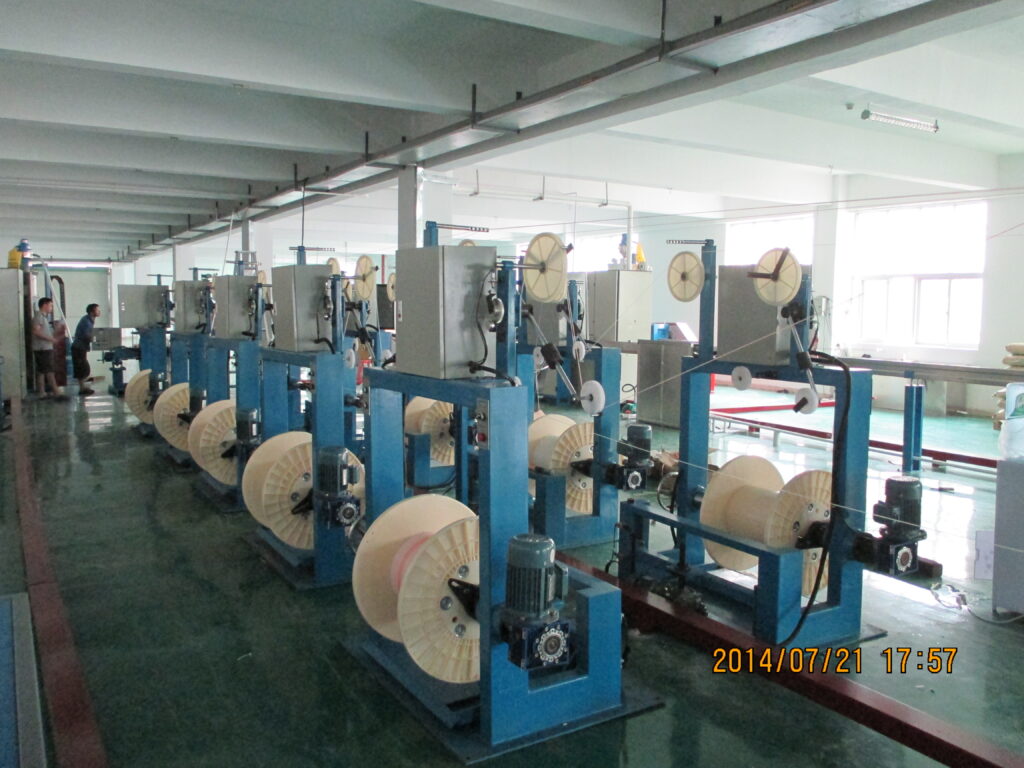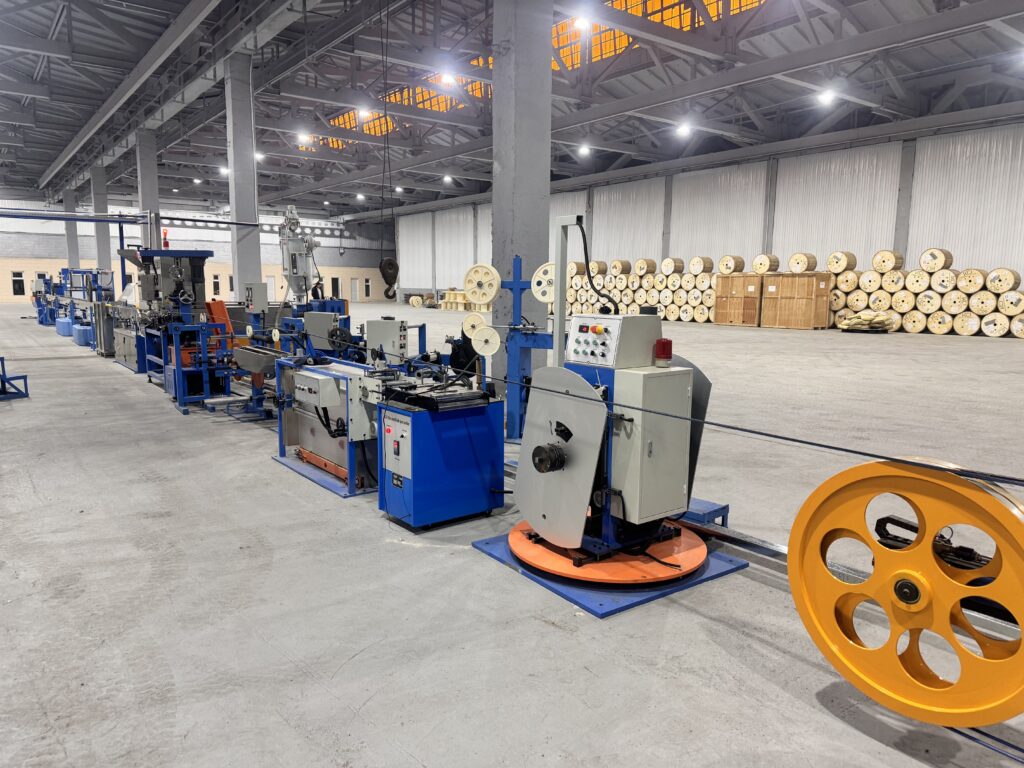
High-fiber-count cable production

The Core of Fiber Optic Cable Equipment Manufacturing: The “Metal Core” Inside the Differential Gearbox and the “Eyes” on the Sheathing Line

In 2025, the journal Wire & Cable published a paper on the design of high‑speed stranding and cabling units. The paper pointed out that traditional stranding units in high‑speed cabling processes have shortcomings in speed, durability, accuracy, and digital interconnectivity – issues that need to be addressed through the adoption of new servo motors, optimized mechanical structures, improved materials, and enhanced informatization.

Behind this paper lies a technological upgrade that the fiber optic cable equipment manufacturing industry is undergoing.

The core of an SZ stranding and cabling line is the differential gearbox – a cluster of meshing gears rotating forward and backward, tens of thousands of cycles per day. The quality of the differential gearbox directly determines how many years the stranding machine will last and whether the pitch stays accurate. The core of a fiber optic cable sheathing extrusion line is the laser diameter gauge – if the sheath outer diameter deviates by just 0.01 mm, it detects it and automatically adjusts. The sensitivity of the gauge directly determines whether sheath concentricity can reach above 98%.

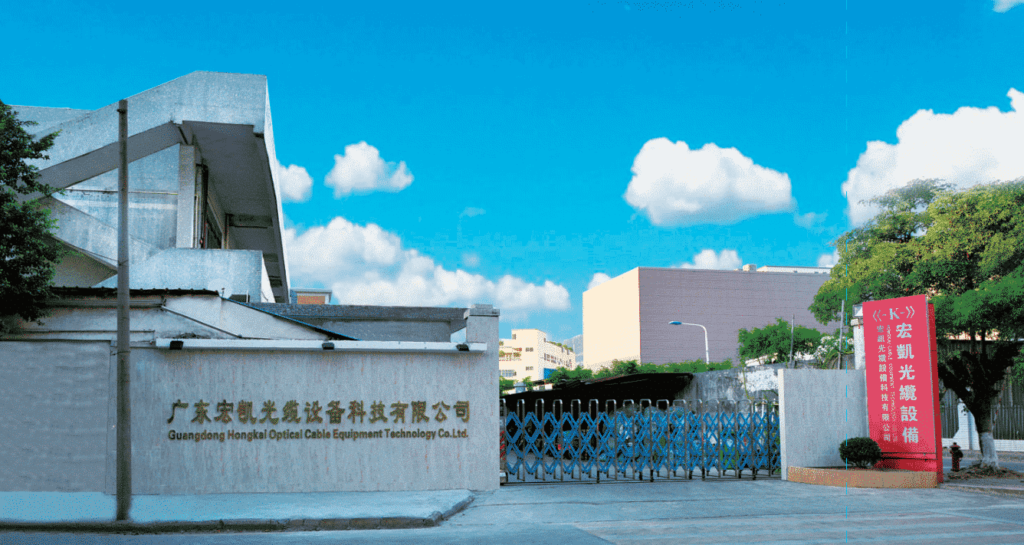
In the workshop of Guangdong Hongkai Optical Cable Equipment Technology Co., Ltd. in Humen, Dongguan, these core components are being crafted one by one by a team of veteran workers who have been in the wire and cable equipment industry for over a decade.

The Core of Fiber Optic Cable Equipment Manufacturing: The “Metal Core” Inside the Differential Gearbox and the “Eyes” on the Sheathing Line Read More »

Fiber Optic Cable Equipment Manufacturing 2026: How AI Data Centers Are Rewriting Technical Standards for Stranding and Sheathing Equipment

In its industry trends report released early this year, the UK-based Commodity Research Unit (CRU) pointed out that the optical fiber and cable markets are undergoing simultaneous transformations in multiple directions – AI-driven data center investment has rapidly emerged as the strongest growth engine, while traditional telecom demand has slowed in several markets. The supply landscape is also shifting, with Chinese fiber and cable manufacturers systematically expanding overseas.

While demand surges, supply lags significantly behind. CRU estimates a global supply-demand gap of approximately 16.4% for fiber optic cables in 2026. Against this backdrop, cable prices continue to rise, overseas orders are already booked through 2028, and cable manufacturers have a strong appetite for capacity expansion – directly driving procurement demand for optical cable manufacturing equipment.

Demand has changed. Products have changed. The equipment that makes cables must change too.

Fiber Optic Cable Equipment Manufacturing 2026: How AI Data Centers Are Rewriting Technical Standards for Stranding and Sheathing Equipment Read More »

Behind the Surge in Fiber Optic Equipment Orders in 2026: A Manufacturer’s Real Perspective

If you had asked me in 2025 whether fiber optic cable equipment was selling well, I might have sighed.

But now it’s 2026, and the situation has completely changed.

Since the beginning of the year, orders have been pouring in like a floodgate opened. G.652.D bare fiber has soared from less than RMB 20 per fiber‑km in early 2025 to RMB 83.4. G.657.A2 specialty fiber is even more dramatic – up from RMB 32 per fiber‑km to RMB 240, a 650% increase. With fiber prices this high, cable manufacturers are racing to expand capacity.

Customs data tells the story even more clearly – in March 2026, fiber optic cable exports reached USD 245 million, up 263.84% year‑on‑year. Many manufacturers already have orders booked through 2028. Overseas customers aren’t haggling over prices anymore – they’re asking, “Can you deliver faster?”

CRU forecasts a compound annual growth rate of about 6.6% for global fiber optic cable demand over the next five years, but the growth rate for AI‑ and data‑center‑related cable demand is as high as 32.6%. Cable demand is shifting from FTTH (Fiber‑to‑the‑Home) to FTTG (Fiber‑to‑the‑GPU). In plain terms, cables used to be for home broadband; now they’re for GPUs in data centers. And that changes everything about what cables need to be.

Behind the Surge in Fiber Optic Equipment Orders in 2026: A Manufacturer’s Real Perspective Read More »

Opening Hours

Monday – Saturday 8am – 11pm

Contact

滚动至顶部
Leave Your Message