2026 年 11 月

Cable Structure Determines Equipment Configuration: Loose Tube, Central Tube, Slotted Core, Ribbon, Butterfly, Indoor Tight-Buffered – How to Select Core Equipment?

When customers procure a fiber optic cable production line, they often ask about configuration as if “optical cable” were a single unified category. But different cable structures have completely different requirements for core equipment. Loose-tube cable requires an SZ stranding line; central-tube cable may not need a stranding machine; slotted-core cable requires dedicated slotted-core equipment; ribbon cable has higher requirements for ribbonizing and stranding precision; FTTH butterfly drop cable requires an FTTH optical cable manufacturing machine; and indoor tight-buffered cable requires an indoor optical fiber production line.

Cable structure determines equipment configuration, and equipment configuration determines product boundaries. Today, working backward from cable structure to core equipment combinations, let’s discuss Hongkai’s logic for configuring an optical fiber cable production line as a Premier Cable Machine Manufacturer.
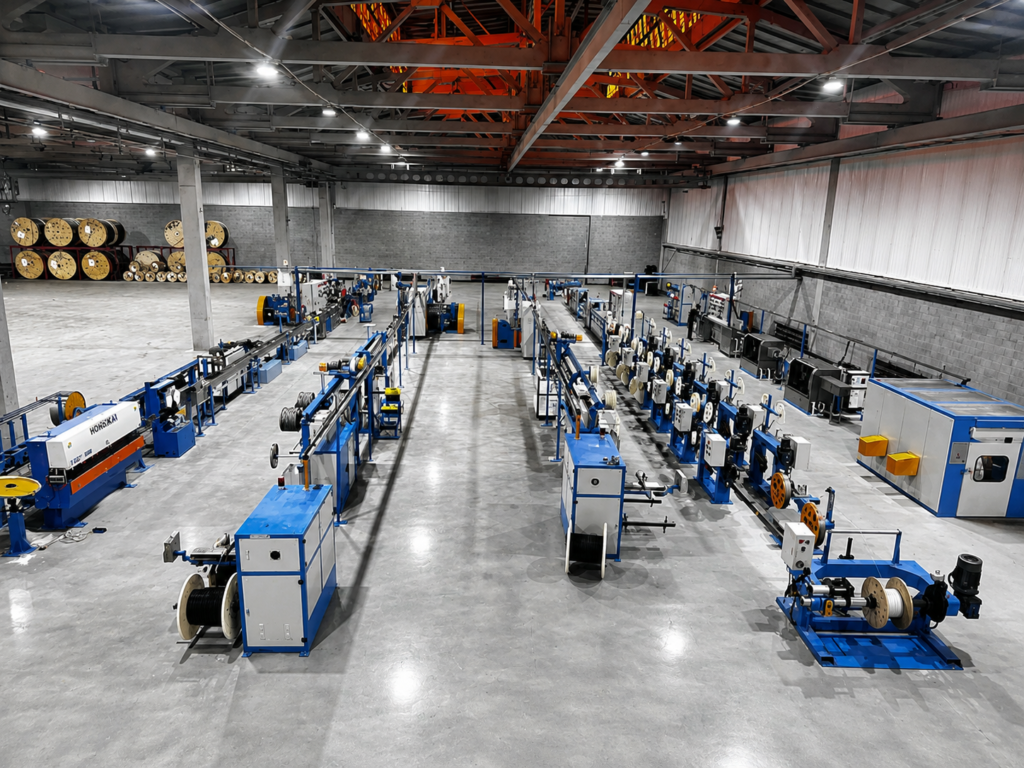
Cable Structure Determines Equipment Configuration: Loose Tube, Central Tube, Slotted Core, Ribbon, Butterfly, Indoor Tight-Buffered – How to Select Core Equipment? Read More »

Core Equipment Selection for Fiber Optic Cable Production Lines: Why Shouldn’t Parameters Be Chosen “Right at the Standard”?

When customers procure a fiber optic cable production line, they often use industry standards as the basis for selection: tension fluctuation ≤ ±0.5 N, pitch deviation ≤ ±0.1 mm, concentricity ≥ 98%. These standards are correct, but if equipment parameters are chosen “right at the lower limit of the standard,” the line is prone to stalling once it starts running – switch to a new batch of material, increase speed slightly, or take on a demanding order, and the equipment’s capability is no longer sufficient.

Core equipment selection requires reasonable capability redundancy. It’s not waste – it leaves room for process fluctuation. Today, from the perspective of the entire fiber optic cable making machine series, let’s discuss why parameters shouldn’t be chosen right at the standard, and Hongkai’s logic for core equipment capability configuration as a Premier Cable Machine Manufacturer.
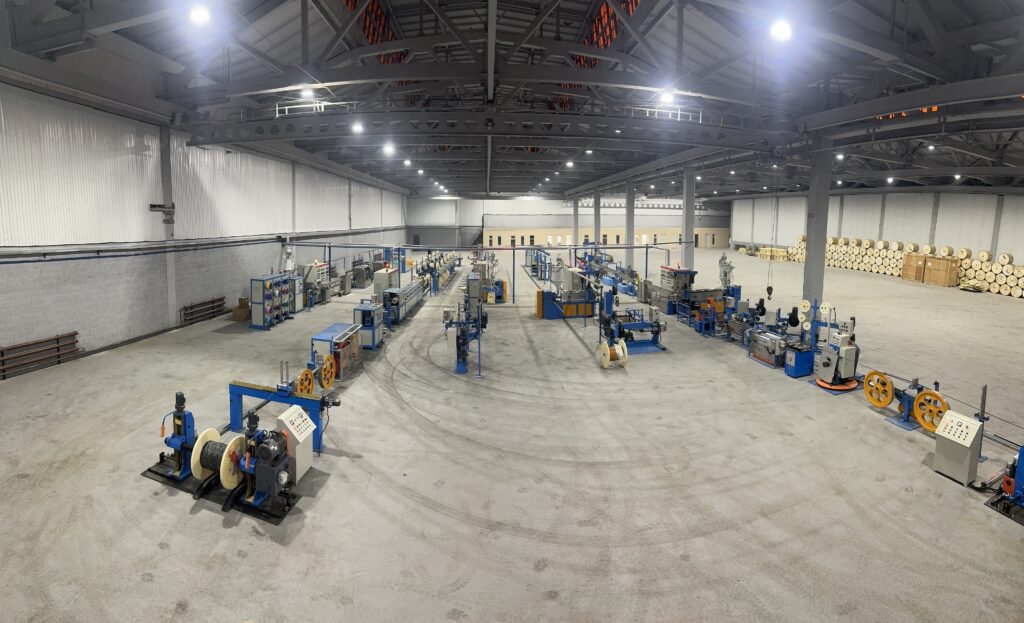
Core Equipment Selection for Fiber Optic Cable Production Lines: Why Shouldn’t Parameters Be Chosen “Right at the Standard”? Read More »

How to Configure a Complete Optical Cable Equipment Production Line for a Fiber Optic Cable Project?

Equipment selection often starts with a product list: outdoor optical cables, breakout cables, control cables, insulated cables, and even regional-market cable products such as Lan-kaapeli. As a Premier Cable Machine Manufacturer, Hongkai is also a professionele vervaardiger wat optiese kabel maak. At the early stage of a project, we help customers clarify their product structure and then work backward to determine the core equipment configuration of the Optical Cable Equipment Production Line.

This article, from the perspective of project configuration and process matching, explains how a complete optical cable production line is built around core equipment such as the SZ stranding line, PLC controlled extruder, breakout extrusion line, and loose tube stranding, and also covers the delivery requirements of Overseas export service and CE certified equipment.

How to Configure a Complete Optical Cable Equipment Production Line for a Fiber Optic Cable Project? Read More »

A Panoramic View of Core Equipment and Process Control on a Fiber Optic Cable Production Line: From the SZ Stranding Line to the Breakout Extrusion Line

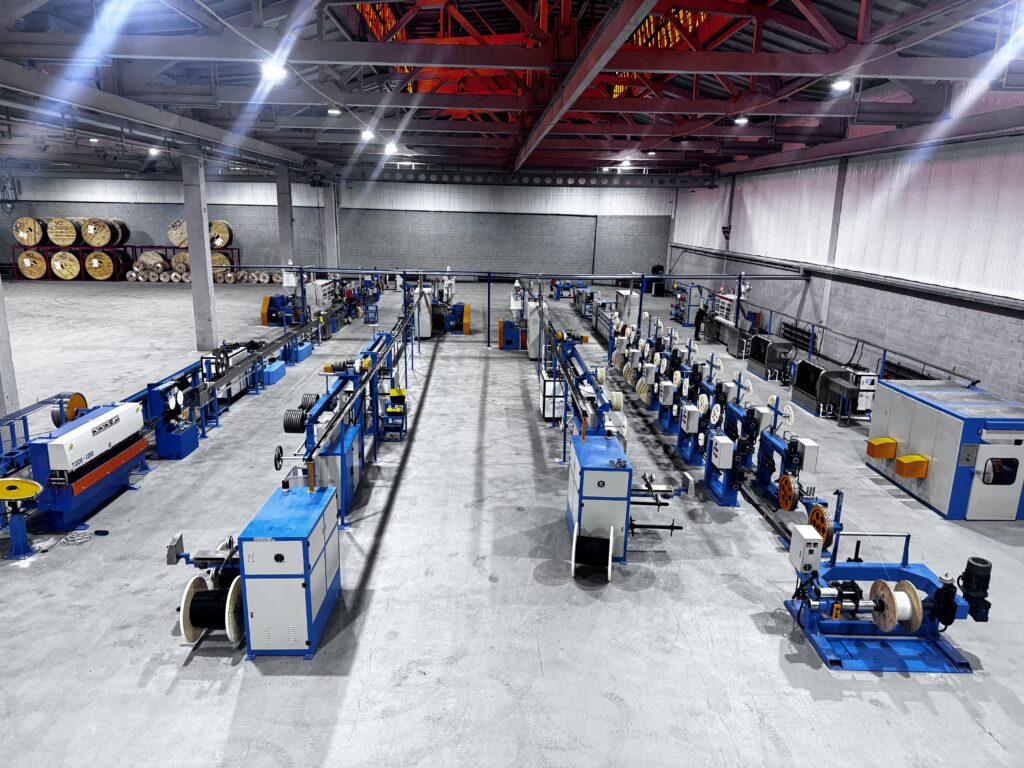
In a fiber optic cable manufacturing project, equipment selection is not just about buying a few standalone machines – it is about building an Optical Cable Equipment Production Line that can run stably. As a Premier Cable Machine Manufacturer, Hongkai is also a professional manufacturer of optical cable making equipment, providing configuration solutions from core standalone machines to full-line collaboration for products such as optical cables, outdoor optical cables, indoor optical cables, loose tubes, and insulated cables.

This article focuses on the core equipment and process control of a fiber optic cable production line, explaining how key links such as SZ Stranding Machine Operation, stranding pitch control, PLC controlled extruder, and loose tube stranding support the output of the entire line.

A Panoramic View of Core Equipment and Process Control on a Fiber Optic Cable Production Line: From the SZ Stranding Line to the Breakout Extrusion Line Read More »

Core Equipment Integration and Commissioning on a Fiber Optic Cable Production Line: From Standalone Machines to the Complete Line – What Is the System Integration Logic?

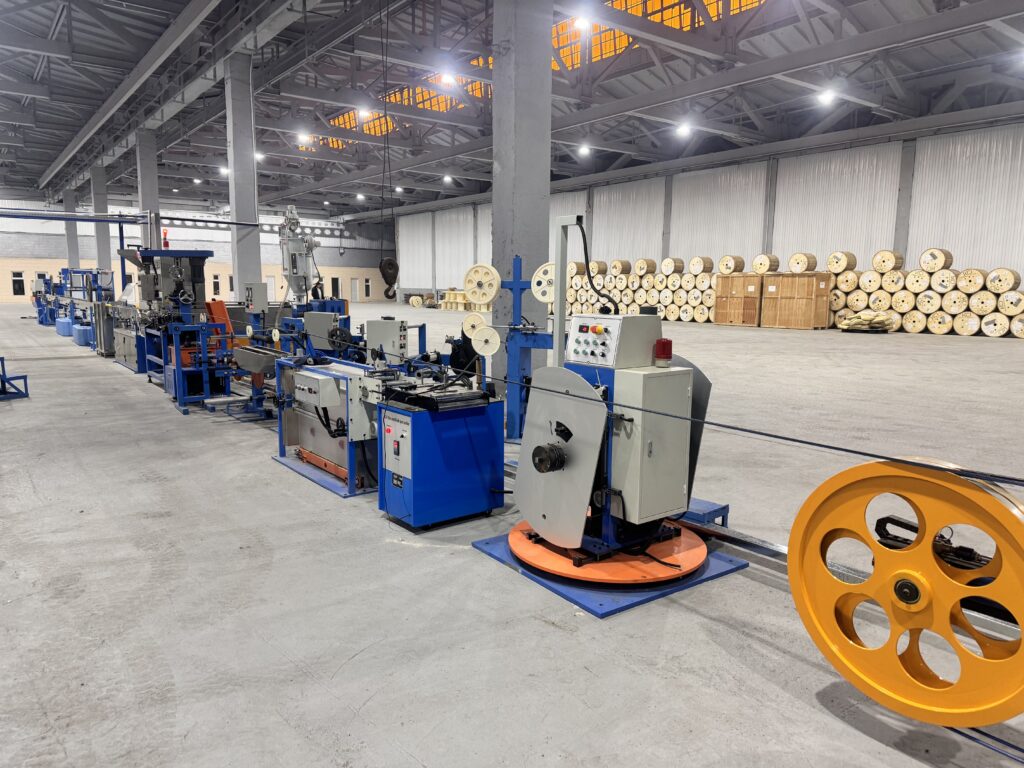
A fiber optic cable production line consists of multiple core machines: fiber coloring machine, secondary coating line for optical fiber, loose tube line, SZ stranding line, fiber optic cable sheathing line, FTTH optical cable manufacturing machine, and indoor optical fiber production line.

Individual machine tests passing doesn’t mean the whole line will run smoothly. Whether the complete line runs smoothly depends on the integration and commissioning between core machines – whether the speed chain, tension chain, and data chain can work in coordination.

Today, from the perspective of equipment manufacturing and delivery, let’s discuss the core equipment integration and commissioning logic of an optical fiber cable production line, and how Hongkai, as a Premier Cable Machine Manufacturer, approaches full-line integration and commissioning.

Core Equipment Integration and Commissioning on a Fiber Optic Cable Production Line: From Standalone Machines to the Complete Line – What Is the System Integration Logic? Read More »

The Speed Chain and Capacity Matching of Fiber Optic Cable Manufacturing Equipment: Why Is the Whole Line’s Capacity Determined by the Slowest Core Machine?

When procuring a fiber optic cable production line, overseas customers most often ask “what’s the capacity?” But capacity is not a single number – it is jointly determined by the speeds of all the core machines on the line.

The fiber coloring machine can reach 3,000 m/min, the secondary coating line for optical fiber runs at 350 m/min, the SZ stranding line runs at 80 m/min, and the fiber optic cable sheathing line runs at 80 m/min. Fast upstream, slow downstream – the whole line’s capacity is not determined by the fastest machine, but by the slowest core machine.

Today, from the perspective of core equipment selection, let’s discuss the speed chain and capacity matching of an optical fiber cable production line, helping overseas buyers work out “how many machines to buy and how to configure them.” As a Premier Cable Machine Manufacturer, Hongkai helps customers perform capacity matching calculations before signing the contract.

The Speed Chain and Capacity Matching of Fiber Optic Cable Manufacturing Equipment: Why Is the Whole Line’s Capacity Determined by the Slowest Core Machine? Read More »

Complete Analysis of Fiber Optic Cable Manufacturing Equipment: From Fiber Coloring Machine to Fiber Optic Cable Sheathing Line – What Core Units Does a Complete Production Line Need?

Fiber optic cable manufacturing is a precision manufacturing process that links multiple processes in series. From transparent optical fiber to finished cable, it goes through coloring, secondary coating/loose tube, SZ stranding and cabling, sheathing extrusion, and other processes. Each process corresponds to a category of core equipment, and when these machines are connected in series, they form a complete fiber optic cable production line.

As a Premier Cable Machine Manufacturer, Hongkai’s entire fiber optic cable making machine series covers the full cable production process. This article, starting from the equipment itself, outlines the core units on a complete optical fiber cable production line, along with the core functions and technical features of each type of equipment.

Complete Analysis of Fiber Optic Cable Manufacturing Equipment: From Fiber Coloring Machine to Fiber Optic Cable Sheathing Line – What Core Units Does a Complete Production Line Need? Read More »

Same Recipe, Why Can’t Another Factory Produce the Same Cable? The Core Lies in Equipment “Recipe Reproducibility”

An overseas customer ran G.657.A2 cable at Factory A using a certain recipe – pitch, tension, and temperature parameters were all recorded. Later, they set up a new fiber optic cable production line at Factory B and copied the same recipe over, but the cable produced was different: sheath concentricity was on the low side, and stranding pitch occasionally exceeded tolerance.

The customer asked: “The recipe is identical – why are the results different?”

The problem is often not in the recipe itself, but in the equipment’s recipe reproducibility – whether the equipment can stably “execute” a set of process parameters to the letter, and produce the same results across different production lines, different shifts, and different operators.

Today, from the perspective of core equipment functions, let’s discuss recipe reproducibility on an optical fiber cable production line, and how Hongkai, as a Premier Cable Machine Manufacturer, designs equipment so that “the same recipe produces the same result.”

Same Recipe, Why Can’t Another Factory Produce the Same Cable? The Core Lies in Equipment “Recipe Reproducibility” Read More »

From Equipment Selection to Complete Line Delivery: Why Do Overseas Fiber Optic Cable Factories Need a “One-Stop” Solution?

Over the years of exporting cable equipment, I’ve seen too many customers fall into the same pit: buying equipment one machine at a time, and piecing together a production line one segment at a time.

From Equipment Selection to Complete Line Delivery: Why Do Overseas Fiber Optic Cable Factories Need a “One-Stop” Solution? Read More »

Opening Hours

Monday – Saturday 8am – 11pm

Contact

滚动至顶部
Leave Your Message