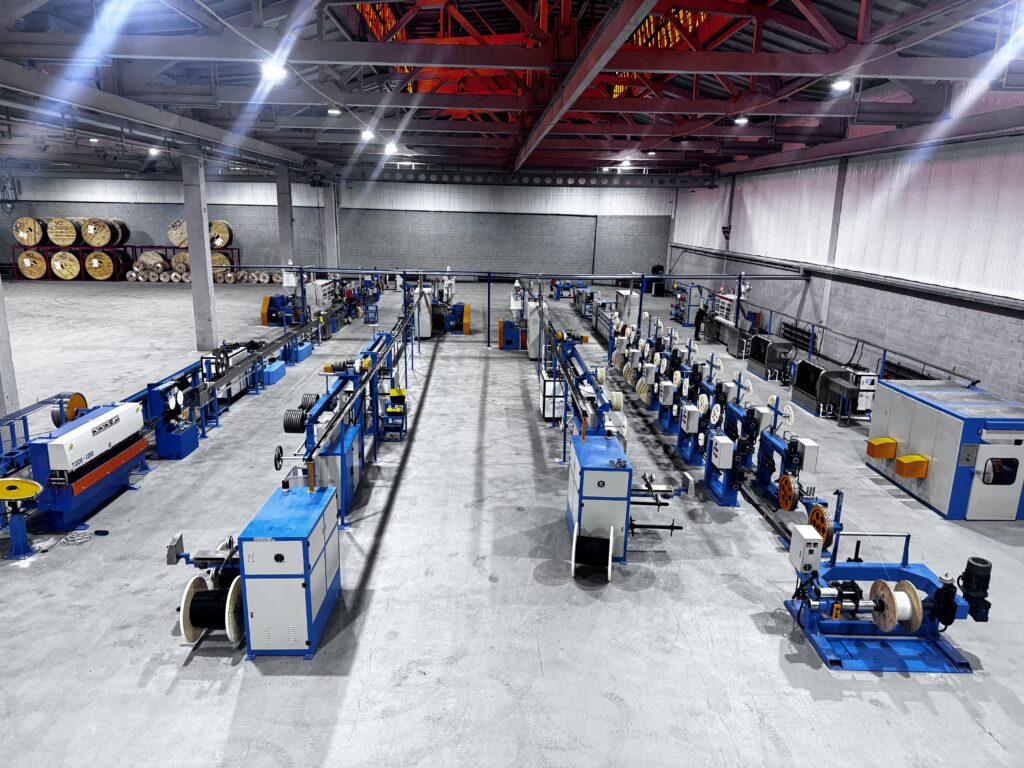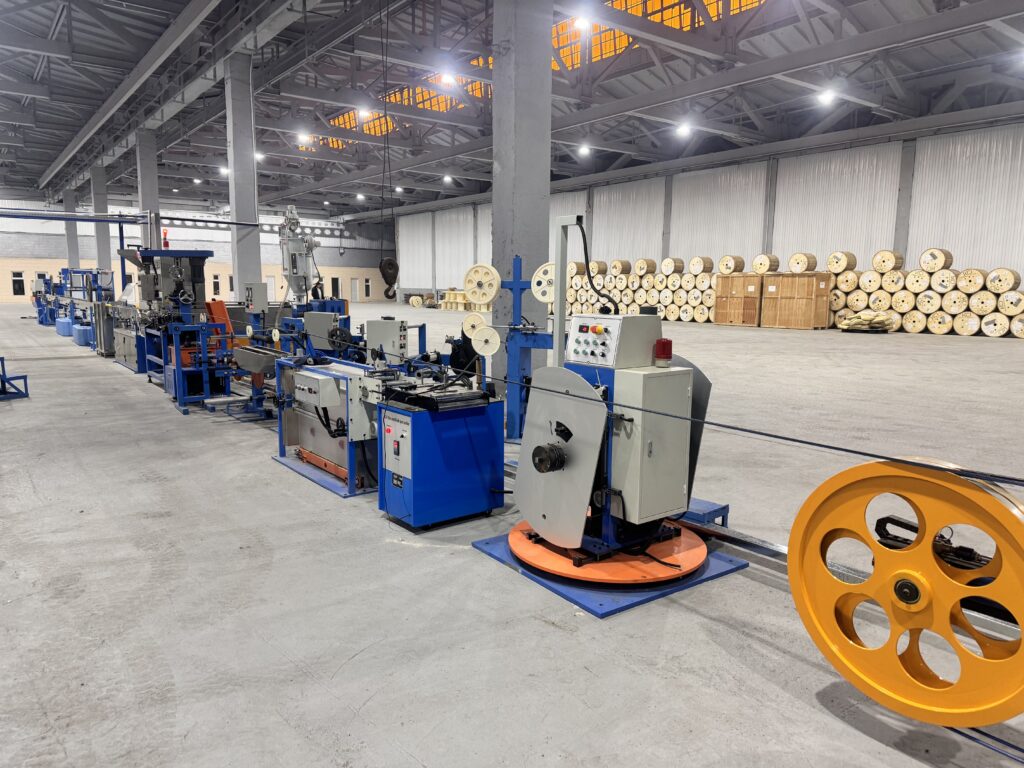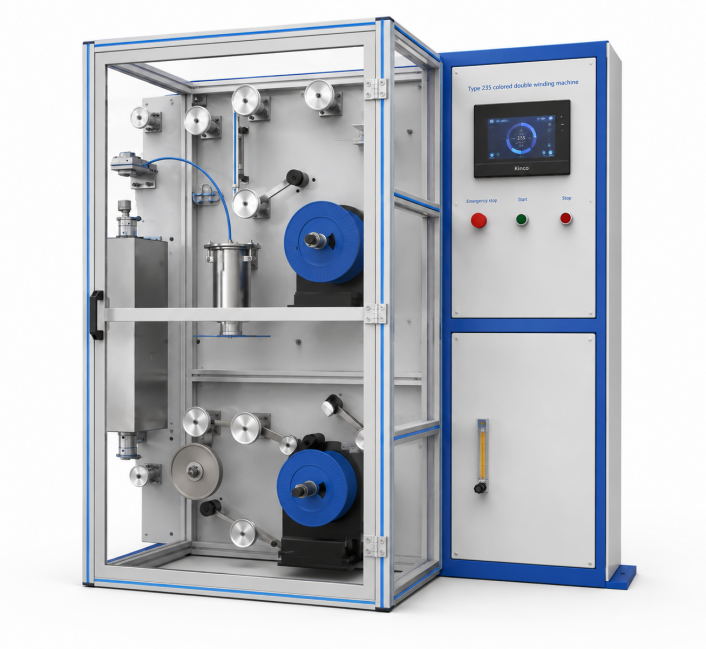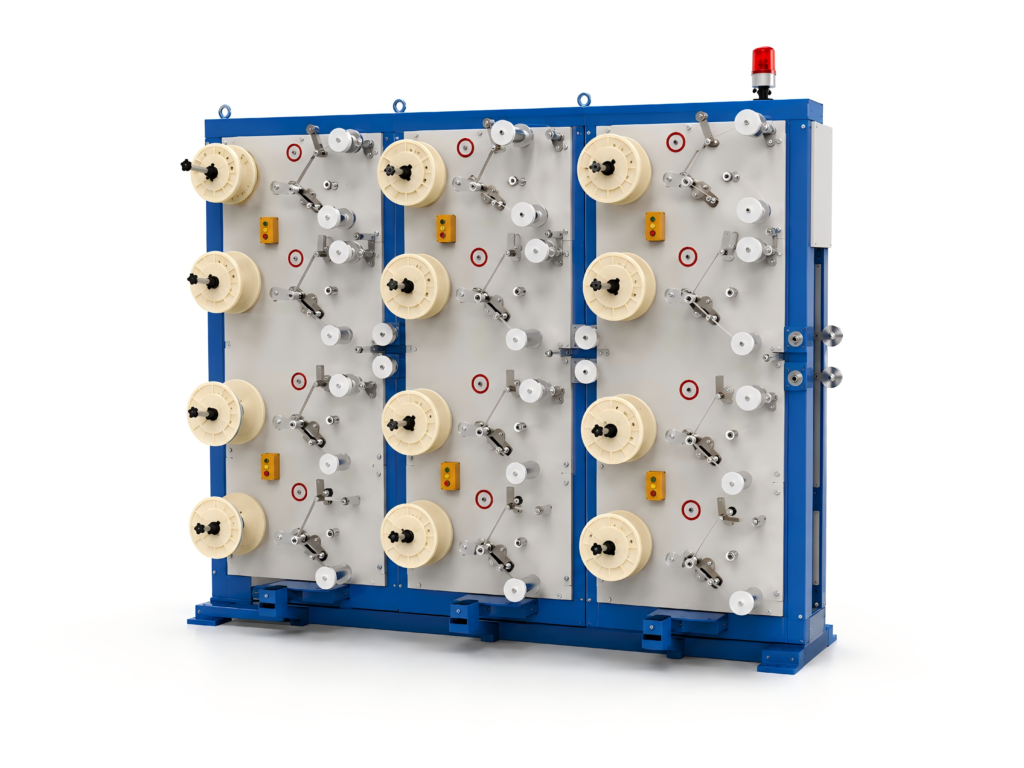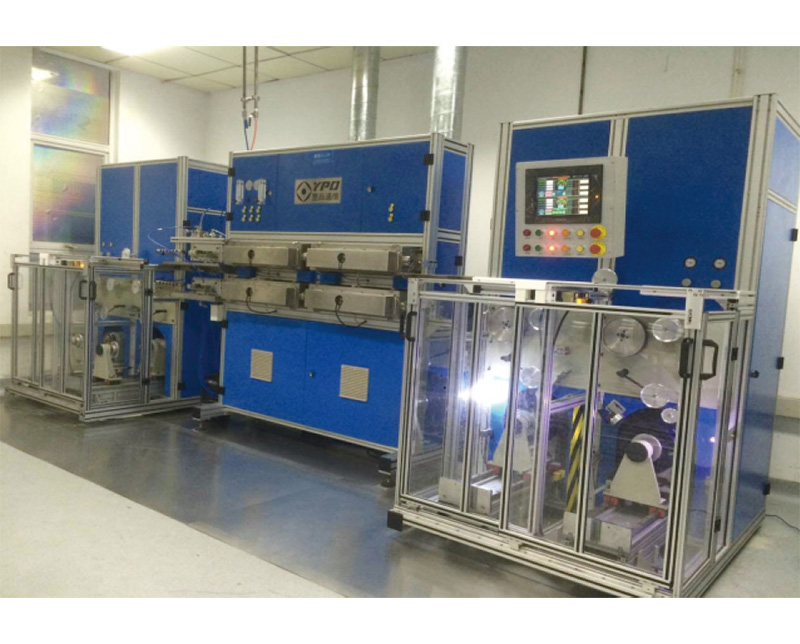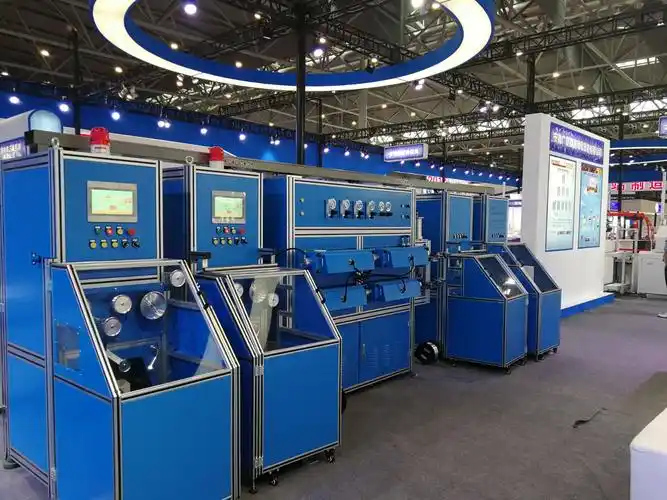
FTTH drop cable production line

Old Stranding Machines Can’t Handle High-Fiber-Count Orders – Where’s the Problem?

A cable factory owner in Zhejiang, surnamed Chen, had been in the cable business for over a decade. Starting in the second half of last year, overseas orders suddenly surged – especially high-fiber-count cables for data centers, integrating thousands or even tens of thousands of fibers into a single cable.

Mr. Chen had a stranding machine that was nearly ten years old – a significant investment at the time, and it had served him well. But when running high-fiber-count cables, problems emerged – pitch deviation exceeded tolerances, and the scrap rate jumped from 1% to over 8%.

He contacted the manufacturer, who said the equipment was fine and that it was an operator issue. He then hired a third-party inspection firm, whose report concluded that the equipment’s precision had indeed degraded.

Mr. Chen called me: “Old Liu, can this machine still be fixed?”

I asked: “Have you ever changed the oil in the differential gearbox?”

“Yes – last year.”

“Have you inspected the gears?”

“Never opened it up.”

“Then open it and take a look.”

Old Stranding Machines Can’t Handle High-Fiber-Count Orders – Where’s the Problem? Read More »
The Complete Manufacturing Process of a Cable Machine: Six Checkpoints from Design to Factory Release

When cable factories buy equipment, their main concerns are price, accuracy, and delivery time. But few stop to consider – from blueprints to a fully operational machine, how many steps does an SZ stranding and cabling line or a sheathing extrusion line actually go through?

Cable equipment is not “building blocks.” A stranding machine weighs dozens of tons and contains hundreds of components. From design to factory release, every step is governed by strict standards. The national standard Code for Construction and Quality Acceptance of Production Equipment Installation Engineering in Optical Fiber Cable Factories (GB 50950‑2013) specifies clear requirements for cable equipment manufacturing and acceptance – equipment performance inspection must be conducted after load operation is completed, and an acceptance report must be issued. This standard applies to fiber coloring machines, secondary coating lines, stranding lines, sheathing lines, and other cable production equipment.

Below, starting from the design phase of a cable machine, we break down the complete manufacturing process.

The Complete Manufacturing Process of a Cable Machine: Six Checkpoints from Design to Factory Release Read More »

The “Precision Code” in Fiber Optic Cable Equipment Manufacturing: From 0.01 mm to 0.2 μm

There’s a saying in the fiber optic cable industry: “Even a 0.1°C temperature deviation or a 0.01 mm dimensional error can affect the ultimate transmission speed and stability of the fiber.”

Anyone in the cable business knows the weight of that statement. But few stop to consider that the equipment used to make those cables has precision requirements no less demanding than the cables themselves.

An SZ stranding and cabling line must control the tooth surface roughness of differential gears to within 0.8 μm. A fiber optic cable sheathing line must achieve laser diameter gauge accuracy of 0.2 μm. A tension control system must keep fluctuation within ±0.5%.

These numbers are the “precision code” of cable equipment.

The “Precision Code” in Fiber Optic Cable Equipment Manufacturing: From 0.01 mm to 0.2 μm Read More »

All Sorts of Things I’ve Encountered in After-Sales Service for Cable Equipment

Over the years in after-sales service, I’ve encountered all sorts of customers. But one incident stands out more than any other.

I got a call from a customer in Southeast Asia – their sheathing line had been down for nearly two days.

The fault was very typical: the extruder could still heat up, the screw could still rotate, but the capstan and take-up were out of sync – the machine would alarm as soon as it started. The customer’s electrician had spent a full day troubleshooting – checked the wiring, replaced relays, rebooted the PLC – but nothing worked. Eventually, they concluded the PLC was faulty and were preparing to order a replacement.

I said: “Hold on – don’t rush to replace anything. Let me take a look via video call.”

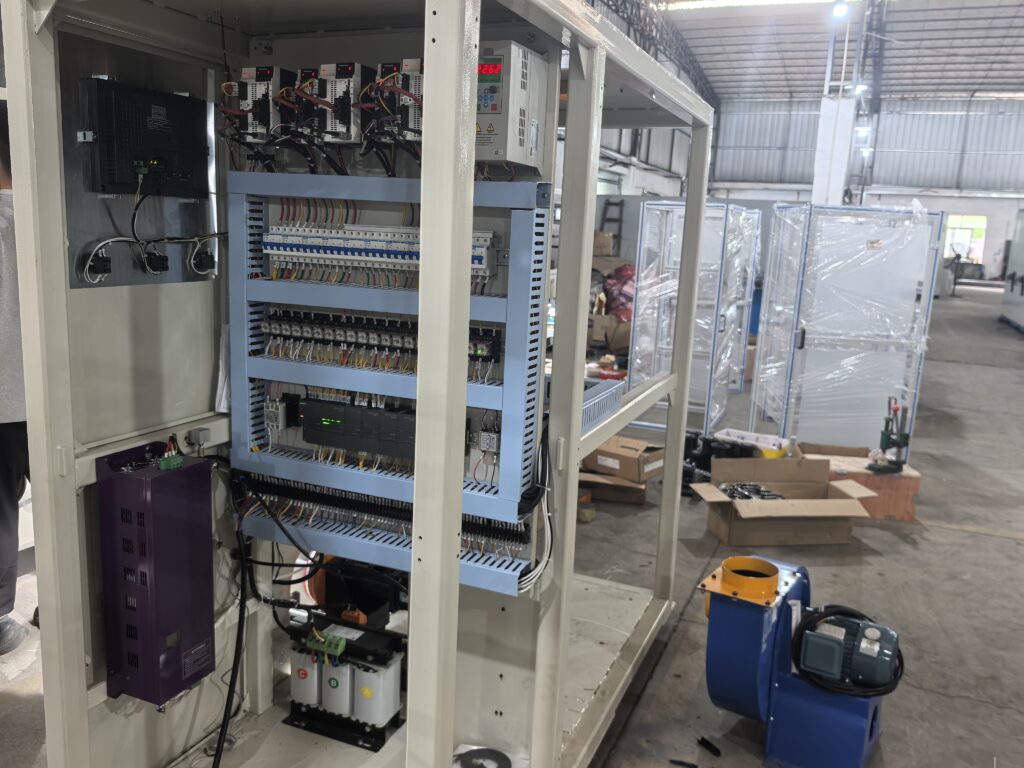
“Open the control cabinet door – let me see the wiring.”

After the video connected, I had him open the control cabinet and go through the wiring. The wire labels were clear, nothing was loose, and there were no burn marks.

“Do you have a multimeter?”

He said yes. I had him set it to voltage and check the 24V supply to the PLC output module – it was normal. Then I had him check the analog input terminals on the inverter – no voltage.

“The signal isn’t getting through,” I said. “Trace this wire back and see if there’s a break somewhere.”

He searched for a while and found a section of cable between the control cabinet and the capstan motor – chewed by rats. The insulation was broken, and two wires had shorted together. After reconnecting them properly, the machine returned to normal. Total time: less than an hour.

The customer laughed on the other end of the video: “So a rat cost me two days of production!”

Later, he told me he had contacted other manufacturers, and their first reaction was “replace the PLC module” – quoting over 20,000 RMB and a week’s wait for shipping. He didn’t spend a single cent on new parts, and the problem was solved.

All Sorts of Things I’ve Encountered in After-Sales Service for Cable Equipment Read More »

The “Front-End” Processes of a Fiber Optic Cable Production Line: From Fiber Coloring to Loose Tube Forming – How to Choose the Right Equipment?

Most people in the cable industry are familiar with SZ stranding and cabling lines and sheathing extrusion lines – after all, they are the “star players” in cable stranding and sheathing. However, many overlook the “front-end” processes of cable production: fiber coloring and secondary coating.

Without coloring, all fibers are transparent and indistinguishable during production. Without secondary coating, fibers lack the protection of loose tubes and would break easily during stranding.

These two processes are the “starting point” of a cable production line. If the starting point is done right, the subsequent stranding and sheathing processes will run smoothly.

The “Front-End” Processes of a Fiber Optic Cable Production Line: From Fiber Coloring to Loose Tube Forming – How to Choose the Right Equipment? Read More »

Troubleshooting Tips for Fiber Optic Cable Production Lines – Known Only to Seasoned Operators

Getting a cable production line up and running is one thing; keeping it running smoothly and reliably over the long haul is quite another.

Having worked with cable equipment for over a decade and interacted with hundreds of production lines, we’ve noticed a pattern: many unplanned stoppages aren’t actually because the equipment is “broken” – they happen because the operator doesn’t know how to handle the situation. When an experienced master is on shift, they can tell where the problem is just by listening to the machine. But when a new operator takes over, an alarm goes off and they’re stuck, forced to call the supplier for remote support.

Troubleshooting Tips for Fiber Optic Cable Production Lines – Known Only to Seasoned Operators Read More »

Cable Manufacturing Processes Are Changing: No-Binder Yarn, Integrated Machines, and In-Line Inspection – Can Your Equipment Keep Up?

Over the past decade, the production process for loose-tube cables has remained relatively fixed – coloring, secondary coating, stranding, binder yarn application, sheathing – step by step. But in the last couple of years, cable manufacturers have started asking themselves: can we skip some of these intermediate steps? Can we make lines run faster, take up less floor space, and produce less scrap?

So, new processes are emerging – no-binder-yarn cables, combined stranding-and-sheathing integrated machines, UV-LED curing. New processes mean that cable equipment manufacturers must evolve too.

Cable Manufacturing Processes Are Changing: No-Binder Yarn, Integrated Machines, and In-Line Inspection – Can Your Equipment Keep Up? Read More »

The “Invisible” Details in Fiber Optic Cable Equipment Manufacturing: From the Differential Gearbox to the Laser Diameter Gauge

When cable factories buy equipment, they’re not buying hunks of metal – they’re buying precision, stability, and years of trouble‑free operation.

The core of an SZ stranding and cabling line is the differential gearbox – a cluster of meshing gears rotating forward and backward, tens of thousands of cycles per day. The quality of the differential gearbox directly determines how many years the stranding machine will last and whether the pitch stays accurate.

The core of a fiber optic cable sheathing extrusion line is the laser diameter gauge – if the sheath outer diameter deviates by just 0.01 mm, it detects it and automatically adjusts. The sensitivity of the gauge directly determines whether sheath concentricity can reach above 98%.

These “invisible” details are what make cable equipment truly valuable.

The “Invisible” Details in Fiber Optic Cable Equipment Manufacturing: From the Differential Gearbox to the Laser Diameter Gauge Read More »

The Core of Fiber Optic Cable Equipment Manufacturing: The “Metal Core” Inside the Differential Gearbox and the “Eyes” on the Sheathing Line

In 2025, the journal Wire & Cable published a paper on the design of high‑speed stranding and cabling units. The paper pointed out that traditional stranding units in high‑speed cabling processes have shortcomings in speed, durability, accuracy, and digital interconnectivity – issues that need to be addressed through the adoption of new servo motors, optimized mechanical structures, improved materials, and enhanced informatization.

Behind this paper lies a technological upgrade that the fiber optic cable equipment manufacturing industry is undergoing.

The core of an SZ stranding and cabling line is the differential gearbox – a cluster of meshing gears rotating forward and backward, tens of thousands of cycles per day. The quality of the differential gearbox directly determines how many years the stranding machine will last and whether the pitch stays accurate. The core of a fiber optic cable sheathing extrusion line is the laser diameter gauge – if the sheath outer diameter deviates by just 0.01 mm, it detects it and automatically adjusts. The sensitivity of the gauge directly determines whether sheath concentricity can reach above 98%.

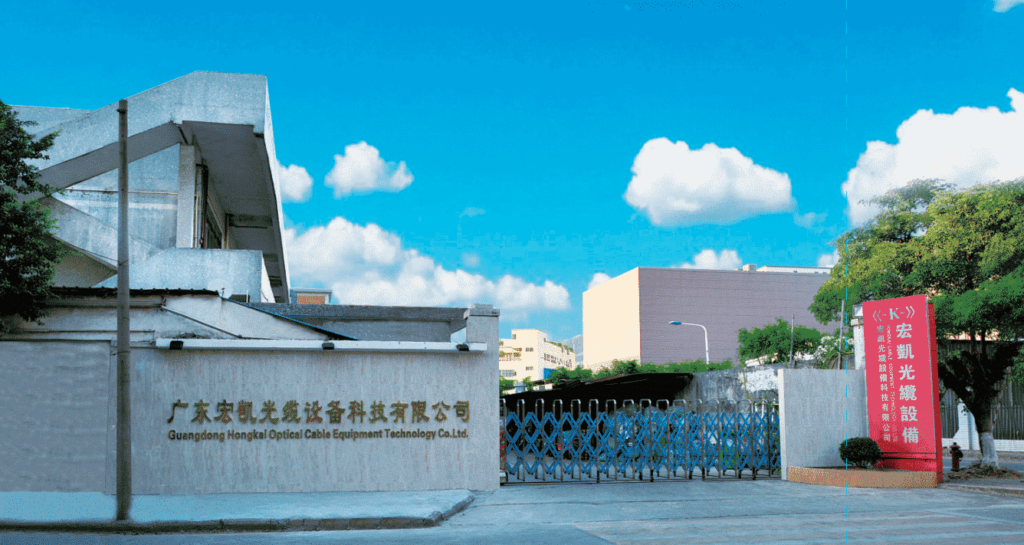
In the workshop of Guangdong Hongkai Optical Cable Equipment Technology Co., Ltd. in Humen, Dongguan, these core components are being crafted one by one by a team of veteran workers who have been in the wire and cable equipment industry for over a decade.

The Core of Fiber Optic Cable Equipment Manufacturing: The “Metal Core” Inside the Differential Gearbox and the “Eyes” on the Sheathing Line Read More »

Opening Hours

Monday – Saturday 8am – 11pm

Contact

滚动至顶部
Leave Your Message