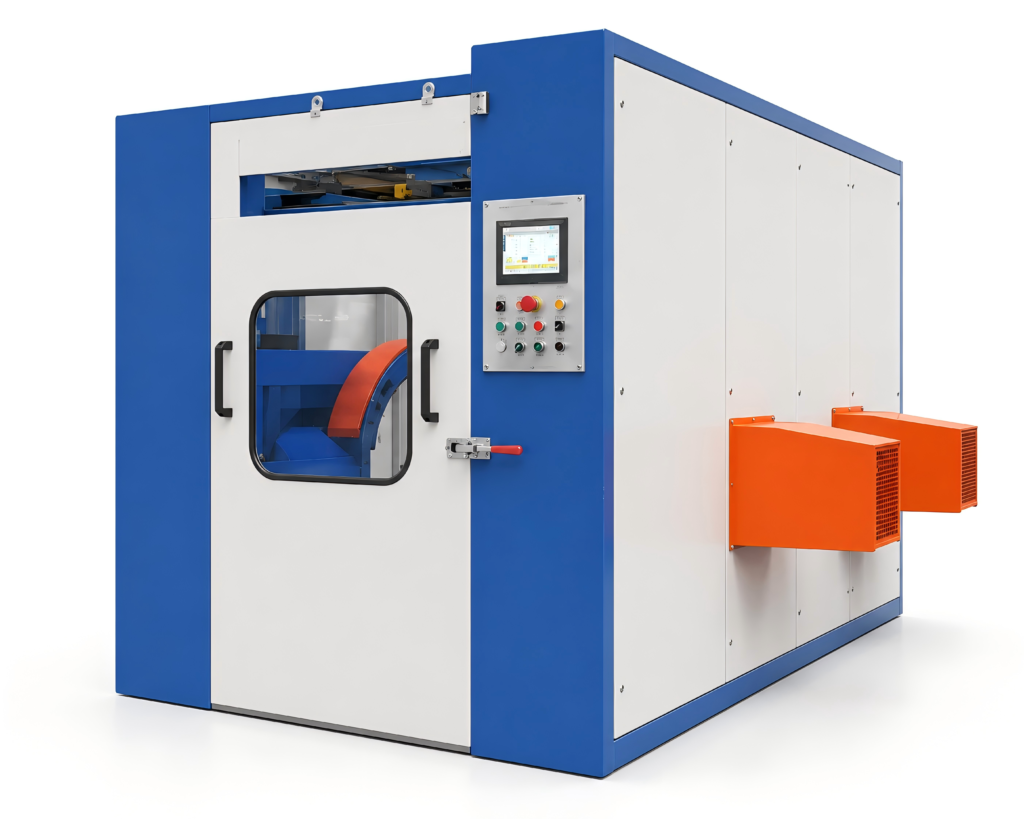
Fiber coloring machine

Core Equipment Selection for Fiber Optic Cable Production Lines: Why Shouldn’t Parameters Be Chosen “Right at the Standard”?

When customers procure a fiber optic cable production line, they often use industry standards as the basis for selection: tension fluctuation ≤ ±0.5 N, pitch deviation ≤ ±0.1 mm, concentricity ≥ 98%. These standards are correct, but if equipment parameters are chosen “right at the lower limit of the standard,” the line is prone to stalling once it starts running – switch to a new batch of material, increase speed slightly, or take on a demanding order, and the equipment’s capability is no longer sufficient.

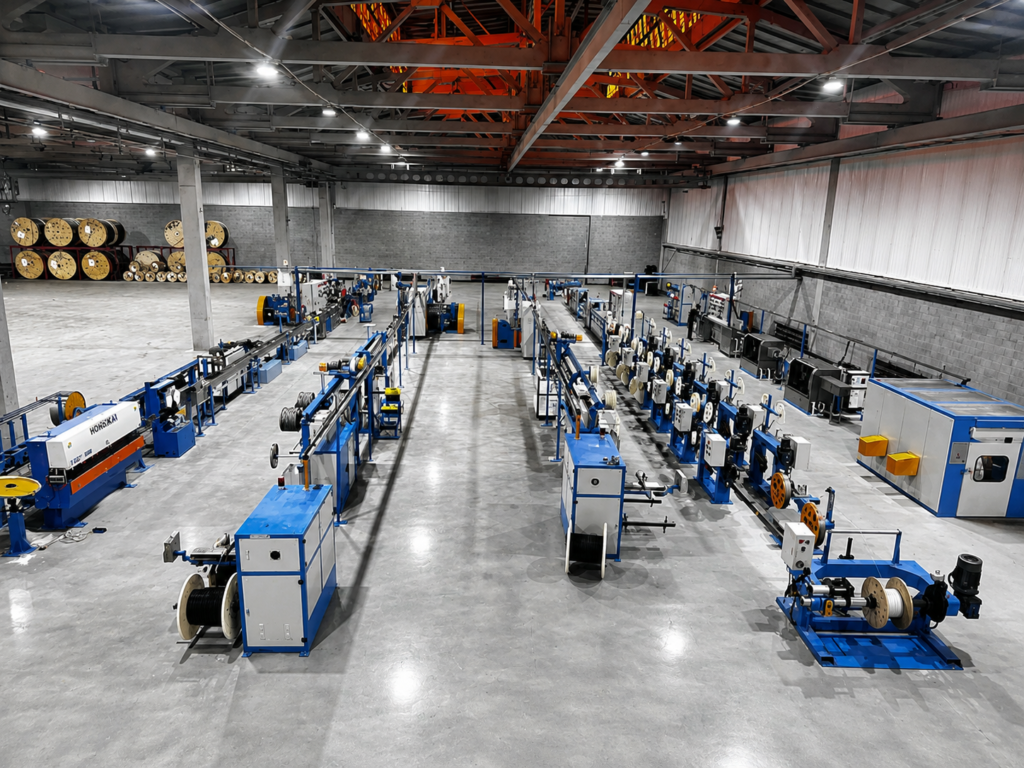
Core equipment selection requires reasonable capability redundancy. It’s not waste – it leaves room for process fluctuation. Today, from the perspective of the entire fiber optic cable making machine series, let’s discuss why parameters shouldn’t be chosen right at the standard, and Hongkai’s logic for core equipment capability configuration as a Premier Cable Machine Manufacturer.
Core Equipment Selection for Fiber Optic Cable Production Lines: Why Shouldn’t Parameters Be Chosen “Right at the Standard”? Read More »

Inline Inspection and Closed-Loop Control on Cable Equipment: Why Is “Real-Time Feedback” More Cost-Effective Than “Post-Production Inspection”?

For a long time, everyone’s focus has been on how much tension fluctuates, how much pitch deviates, and what the concentricity is. These figures are important, but there’s another question that’s often overlooked: how are these precision levels maintained?

Inline Inspection and Closed-Loop Control on Cable Equipment: Why Is “Real-Time Feedback” More Cost-Effective Than “Post-Production Inspection”? Read More »

The “First Article Confirmation” for Fiber Optic Cable Equipment: Why Must the First Reel of Cable Be Inspected Item by Item?

After a factory changes over, operators often go straight to ramping up speed and running volume. The first reel of cable comes off the line, they glance at the surface, see no major issues, and keep running. By the time they’ve run several kilometers, the customer’s sampling inspection finds the pitch is off and the concentricity is insufficient – and the entire reel is scrapped.

The “First Article Confirmation” for Fiber Optic Cable Equipment: Why Must the First Reel of Cable Be Inspected Item by Item? Read More »

How Can Fiber Optic Cable Equipment Run Stably in Regions with Unstable Power Grids? Backup Power and Voltage Fluctuation Solutions

Customers from the Middle East, Africa, and Southeast Asia often ask: “Our power grid is unstable – there are frequent outages, and voltage goes up and down. Can your equipment handle it?”

This is not a minor issue.

Cable production is a continuous operation. Once an SZ stranding line starts up, it runs 24/7. The extruder on a fiber optic cable sheathing line runs continuously at high temperature – a mid-process power outage can cause the screw to seize, material waste, and die blockage. A single unplanned outage can scrap an entire reel of cable core.

Even more troublesome is the voltage surge at the moment the grid recovers – it can directly burn out PLCs, inverters, and sensors.

Today let’s discuss stable operation solutions for a fiber optic cable production line in regions with unstable power grids, helping overseas buyers solve the “power” problem upfront.

How Can Fiber Optic Cable Equipment Run Stably in Regions with Unstable Power Grids? Backup Power and Voltage Fluctuation Solutions Read More »

The Collaboration Logic from Coloring Machine to Sheathing Line on a Fiber Optic Cable Production Line

Customers often ask: “I’ve bought all the equipment – why doesn’t the production line run smoothly?”

Individually, every machine looks fine – the fiber coloring machine runs at 3,000 m/min, the SZ stranding line has tension fluctuation ≤ ±0.4 N, and the fiber optic cable sheathing line achieves 98.6% concentricity. Each one meets the standard. But when they’re connected and running together, something is off.

The problem lies in collaboration.

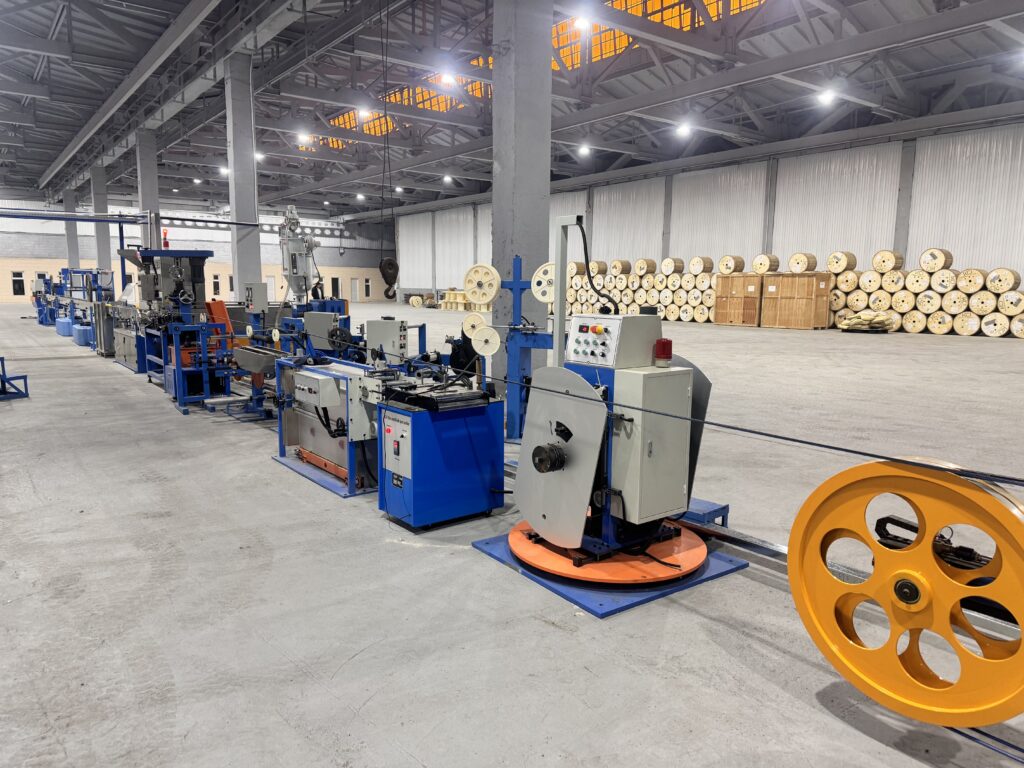
A complete fiber optic cable production line is not just several machines placed together. They need to “talk” to each other – speeds must match, tensions must connect, and data must be exchanged. Today let’s discuss how the machines on a cable production line work together, and what problems arise when collaboration fails.

The Collaboration Logic from Coloring Machine to Sheathing Line on a Fiber Optic Cable Production Line Read More »

Before Overseas Buyers Sign a Cable Equipment Contract, These Seven Clauses Should Be Confirmed One by One

Over the years of exporting cable equipment, I’ve noticed a pattern: overseas customers scrutinize technical parameters in great detail – tension fluctuation, pitch deviation, concentricity – but when it comes time to sign the contract, they pay less attention to some key clauses.

If the contract isn’t well written, disputes multiply later. When the equipment arrives, you discover the voltage is wrong, spare parts weren’t included, training wasn’t arranged, and the warranty scope is unclear – every one of these is a headache.

Today, let’s go through seven clauses that overseas buyers should confirm one by one when signing a fiber optic cable production line contract, helping cable manufacturers keep risks out before signing.

Before Overseas Buyers Sign a Cable Equipment Contract, These Seven Clauses Should Be Confirmed One by One Read More »

The “Modular Design” of Fiber Optic Cable Equipment: Why Can Some Machines Be Upgraded While Others Can Only Be Replaced?

Over the years of exporting cable equipment, I’ve often been asked by customers: “I’m making 12-fiber cable now, but in a couple of years I want to make 24-fiber or higher – can the equipment be upgraded?”

This question seems simple, but behind it lies a core design philosophy in equipment manufacturing – modular design.

If an SZ stranding line wasn’t designed with expansion capability in mind, and the customer wants to upgrade from 12 tubes to 24 tubes, the entire machine might have to be scrapped. But with a modular-designed machine, you only need to add a pay-off stand module and upgrade the control system to achieve capacity expansion.

Today let’s talk about modular design in cable equipment, and why it directly affects the customer’s long-term return on investment.

The “Modular Design” of Fiber Optic Cable Equipment: Why Can Some Machines Be Upgraded While Others Can Only Be Replaced? Read More »

First Startup Guide for Cable Factories: From Unpacking to Cable Output – Eight Steps You Can’t Skip

The equipment has arrived at port, the factory is ready, and the power is connected – now what?

Many overseas customers feel most anxious about the “first startup” after a fiber optic cable production line arrives at their factory. Will the equipment run? Are the parameters correct? Will it alarm as soon as it’s powered on?

Today, using an SZ stranding line and a fiber optic cable sheathing line as examples, let’s walk through the eight steps of first startup. Following this process, from unpacking to producing the first qualified reel of cable typically takes 12 to 18 days.

First Startup Guide for Cable Factories: From Unpacking to Cable Output – Eight Steps You Can’t Skip Read More »

Opening Hours

Monday – Saturday 8am – 11pm

Contact

滚动至顶部
Leave Your Message