HongKai

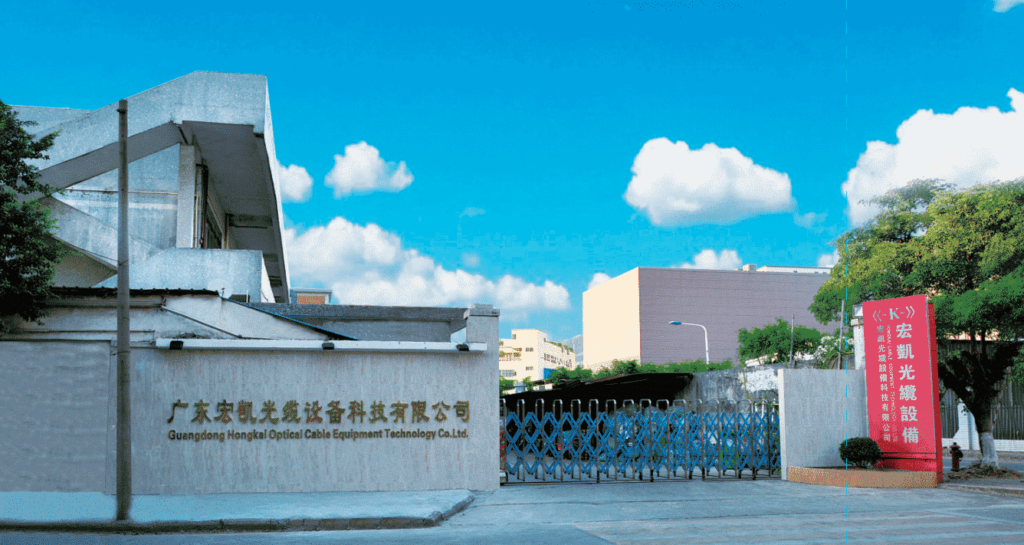
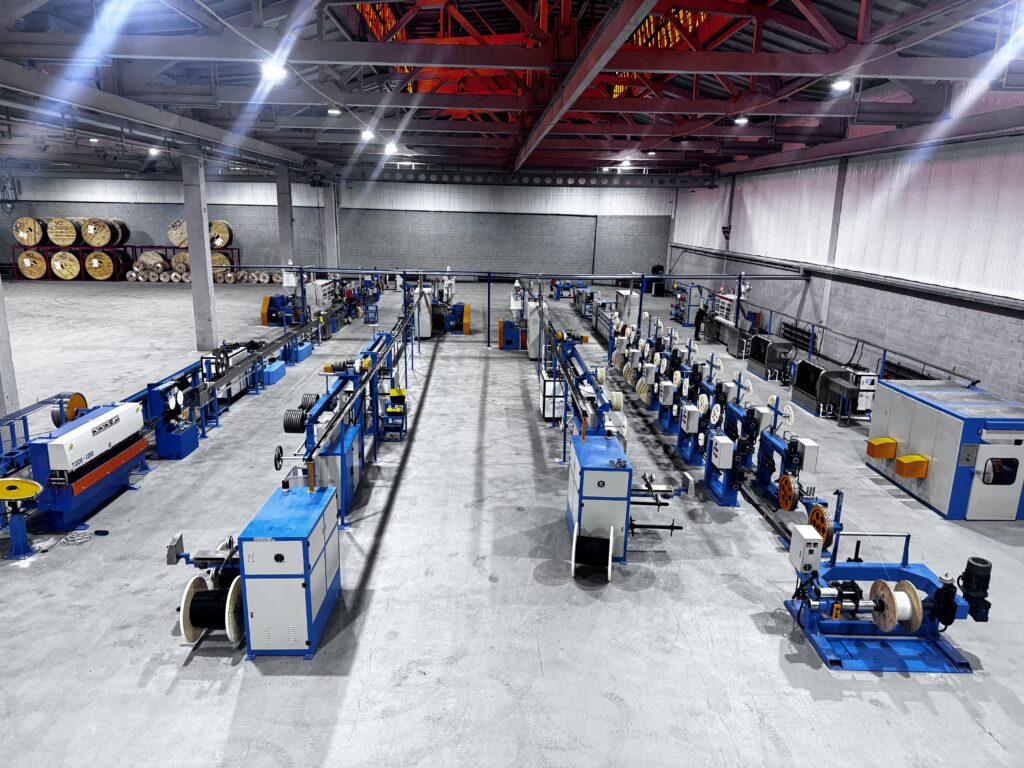
Guangdong Hongkai Optical Cable Equipment Technology Co. Ltd is a specialized provider of high-quality cable manufacturing equipment, renowned for delivering exceptional performance and innovative solutions. If you are looking for a professional manufacturer who makes Optic Cable, Electric Cable, and Network Cable machines, you are in the right place. HONGKAI group opened its door in 2005 as an optic cable machine manufacturer cum a turn-key optic cable production service provider in Guangdong province, China.

How to Write a Complete Technical Specification for a Fiber Optic Cable Production Line: A Cable Equipment Procurement Guide

The first step in procuring a fiber optic cable production line is not asking for a price – it’s writing down clearly “what exactly you want.”

A clear, complete Technical Specification helps equipment suppliers quote accurately, reduces back-and-forth communication, and avoids the awkward situation of equipment that “doesn’t match” after arriving at the factory. This article, from the perspective of overseas buyers, outlines what a complete optical fiber cable production line technical specification should contain, helping cable manufacturers clarify their procurement requirements.
How to Write a Complete Technical Specification for a Fiber Optic Cable Production Line: A Cable Equipment Procurement Guide Read More »

Why Does the Lowest-Priced Fiber Optic Cable Production Line End Up Costing the Most Over Five Years?

When purchasing a fiber optic cable production line, buyers often focus on the numbers on the quotation sheet – whose fiber optic cable making machine is cheaper, whose SZ stranding line comes in at a lower price.

But equipment is bought to be used for five, eight years. The number on the quotation sheet is only one part of the total cost.

Industry analysis indicates that in cable production line operations, auxiliary equipment (take-up, pay-off stands, etc.) accounts for only 5% to 10% of total maintenance expenditure, while core main machines such as extrusion lines can account for 45% to 65%. Extrusion lines run continuously at high temperatures of 180–220°C – thermal stress combined with material corrosion makes screw wear and heating element failure the most frequent problems.

This article uses a typical cable production line as an example to break down the five components of five-year Total Cost of Ownership (TCO), helping buyers see exactly where the “lowest-priced” equipment is actually “expensive.”

Why Does the Lowest-Priced Fiber Optic Cable Production Line End Up Costing the Most Over Five Years? Read More »

Five Stages of Acceptance for a Fiber Optic Cable Production Line

Many cable factory owners share a misconception: once the equipment arrives and can run, installation is done. In reality, between powering up the equipment and actually starting production, there are five stages: installation, commissioning, training, acceptance, and handover. Each stage has clear “deliverables.” Skip any one, and the production line may fall into the trap of “no one knows how to operate it, no one knows who to call when it breaks, and no one knows how to adjust parameters when they’re wrong.”

This article, from the perspective of a cable equipment buyer, breaks down the complete acceptance process for an optical fiber cable production line – from port arrival to production launch – helping cable manufacturers clarify exactly what should be done after the equipment reaches the factory.

Five Stages of Acceptance for a Fiber Optic Cable Production Line Read More »

How Do Cable Manufacturers Choose a Fiber Optic Cable Production Line Supplier? Five Key Evaluation Dimensions

For fiber optic cable manufacturers, choosing an equipment supplier is not just about “looking at price, checking specs, and signing a contract.” When the equipment arrives overseas, who installs it? What if it breaks down? How soon can spare parts arrive? Are the certification documents complete? These are questions that must be clarified before signing the contract.

This article, from the perspective of overseas customers, outlines the five most critical evaluation dimensions when choosing a fiber optic cable making machine supplier.

How Do Cable Manufacturers Choose a Fiber Optic Cable Production Line Supplier? Five Key Evaluation Dimensions Read More »

Before Cable Equipment Delivery: How Do You Verify That Precision “Meets the Standard”?

When you buy equipment, what do you fear most?

It’s not the high price, and it’s not slow delivery. It’s when the equipment arrives and the precision doesn’t meet the standard.

An SZ stranding line – the quotation says “high tension control accuracy,” but in actual operation the pay-off tension fluctuation is ±1.5 N. A fiber optic cable sheathing line – the manufacturer says “good concentricity,” but the actual product has wall thickness that is thick on one side and thin on the other. The equipment money is spent, the production line can’t run, and orders can’t be delivered.

Where’s the problem? Before delivery, was the precision ever actually verified?

Before Cable Equipment Delivery: How Do You Verify That Precision “Meets the Standard”? Read More »

Different Optical Cable Products, How to Configure Production Lines? From Outdoor to Indoor, from Loose Tube to FTTH – An Equipment Selection Guide

Cable factories are eager to expand capacity and build new production lines, but different products have very different equipment requirements. A fiber optic cable production line is not a one-size-fits-all configuration – making outdoor loose-tube cables and FTTH butterfly drop cables requires completely different equipment.

This article breaks down the equipment configurations for different cable products, helping cable manufacturers plan their fiber optic cable making machine procurement based on their product positioning.

Different Optical Cable Products, How to Configure Production Lines? From Outdoor to Indoor, from Loose Tube to FTTH – An Equipment Selection Guide Read More »

Before a Cable Machine Leaves the Factory: From No-Load to Load – How Many Checkpoints Must a Stranding Machine Pass?

When buying cable equipment, you look at specifications when signing the contract – and at data after the equipment arrives at your plant.

This means that before an SZ stranding and cabling line leaves the factory, it’s not enough that it’s “assembled and can run.” It must pass through three checkpoints: no-load trial run, load trial run, and performance inspection. Every set of data produced must be recorded and compared item by item against the contract technical documents.

Before a Cable Machine Leaves the Factory: From No-Load to Load – How Many Checkpoints Must a Stranding Machine Pass? Read More »

Cable Equipment Is “Shaking” – What’s Causing It? Five Vibration Sources You Can’t Afford to Ignore

When cable equipment has been in service for a while, it may suddenly start shaking. When that happens, do you panic?

A little more vibration or noise from a stranding machine, and operators might think, “It’s normal – old equipment is like this.” But vibration isn’t just “noise” – it’s an early warning signal from the equipment.

Vibration in a stranding machine can stem from five different problems. Guess wrong, and you can replace parts without fixing anything. Guess right, and tightening a single loose set screw solves the problem.

Cable Equipment Is “Shaking” – What’s Causing It? Five Vibration Sources You Can’t Afford to Ignore Read More »

The Ongoing Technical Evolution of Cable Equipment: From “Functional” to “Exceptional” – What’s Happening in Equipment Manufacturing?

Cable factories are racing to expand capacity – and the equipment manufacturers that supply them are evolving right alongside.

A 2025 study published in the journal Wire & Cable on the design of high‑speed stranding and cabling units pointed out that traditional stranding units in high‑speed cabling processes have shortcomings in speed, durability, accuracy, and digital interconnectivity. By adopting new servo motors, optimizing mechanical structures, improving materials, and enhancing informatization, the research team achieved significant increases in line speed, notable improvements in equipment durability, and effective control of stranding accuracy.

Equipment manufacturing itself is undergoing a technical evolution – from “functional” to “exceptional.”

The Ongoing Technical Evolution of Cable Equipment: From “Functional” to “Exceptional” – What’s Happening in Equipment Manufacturing? Read More »

Opening Hours

Monday – Saturday 8am – 11pm

Contact

滚动至顶部
Leave Your Message